
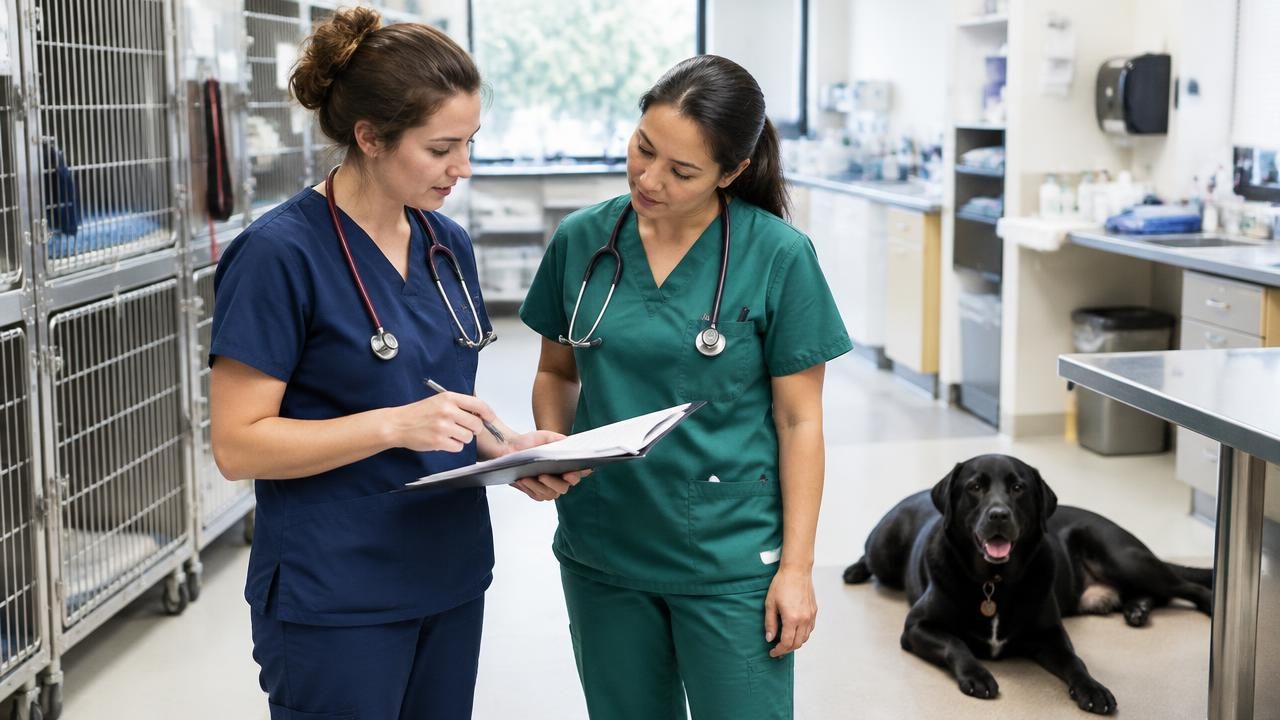
RadsForVets reports place prioritized diagnoses and recommendations first, followed by comprehensive findings. During a shift handoff, that order gives the team an identifiable place to start the imaging discussion. The incoming clinician can read the main interpretation before reviewing the detail supporting it.
The radiologist contributes the imaging interpretation; the clinical team adds the current patient assessment, the plan, and responsibility for follow-up. An organized handoff connects those elements while preserving the full report for the incoming clinician.
Open with the interpretation, then the current patient
Begin by identifying the patient and study, then read the prioritized impression accurately. Preserve any qualification in the diagnoses and recommendations. Next, state the patient’s current clinical condition and any relevant change since image acquisition. This separates what the study showed from what the team has observed afterward.
The opening is an orientation, not the entire handoff. A concise summary should leave the next clinician able to locate the full report and recognize which question prompted the imaging. Avoid compressing several differentials into one confirmed diagnosis that the radiologist did not establish.
Use the comprehensive findings when the question requires them
The findings remain part of the report. Refer to them when the receiving clinician needs the anatomical description, the support for an interpretation, or the stated limits of the study. Impression-on-top changes the order in which the information appears; it does not make the detailed findings unnecessary.
If a particular finding is important to the handoff, identify where it appears and how it relates to the principal concern. A secondary observation and the main diagnosis should not acquire the same weight simply because both are mentioned during the conversation.
Separate a radiologist’s recommendation from the team’s plan
Read the recommendation, then document how the treating veterinarian has considered it. State whether the relevant action has been completed, is planned, or requires further discussion. An available recommendation is not the same as a completed task, and report delivery is not proof of clinical review.
Assign responsibility for any remaining action through the practice’s normal handoff process. The radiologist interprets the images and consults with the referring veterinarian; the ACVR describes that consultation role explicitly. [1] The clinical team integrates the interpretation with the patient’s other information.
Carry the unresolved question into the next shift
If the interpretation needs clarification, communicate the exact question and whether an answer is pending. RadsForVets Real-Time Chat offers a per-study channel for that discussion. Retain the report and relevant exchange so the incoming clinician can distinguish the source conclusion from a later clarification.
For a handoff that occurs before the comprehensive final report on a Wet Read case, distinguish the targeted communication from the final document that is still expected. Do not describe the record as complete when a report remains pending. The handoff should make both the available answer and outstanding task explicit.
A practical handoff sequence
Use this suggested sequence: study and indication; prioritized impression; relevant supporting findings or limitations; current patient update; clinical plan; pending questions; named follow-up responsibility. Adapt it to the practice rather than treating it as a fixed script. The purpose is an understandable link between the interpretation and continuing care.
The RadsForVets format provides the conclusion near the top, like a journal abstract. The clinical handoff completes the picture by stating what has happened since and who acts next. Keep the full report available so a readable summary remains connected to its supporting detail.
Frequently asked questions
What is RadsForVets impression-on-top reporting?
The report presents prioritized diagnoses and recommendations first, followed by comprehensive findings. The conclusion is near the top rather than at the end.
Does the handoff need the complete findings?
Yes, they remain available and should be reviewed when relevant. The impression is a starting point, not a replacement for the full report.
What should follow the imaging impression in a handoff?
State the current patient assessment, the team’s plan, any pending result or clarification, and who is responsible for the next action.
Does a radiology recommendation mean the task is completed?
No. Distinguish a recommendation from a planned or completed clinical action and document the responsible clinician’s decision.
How should a pending Wet Read final report be handled?
Identify the targeted communication already received and state that the comprehensive final report remains pending. Assign responsibility for its review.
How does impression-on-top fit into a shift handoff?
It provides the prioritized imaging interpretation near the top of the report. The clinical team then adds the current patient assessment, plan, open questions, and follow-up responsibilities.
Related reading
References
- [1]American College of Veterinary Radiology. Diplomate Certification: What & How?. https://acvr.org/who-we-are/diplomate-accreditation/
Work with us
Board-certified reads, 1 hour STAT X-ray, every day of the year
No contracts, no minimums, and direct access to the radiologist reading your case.
