
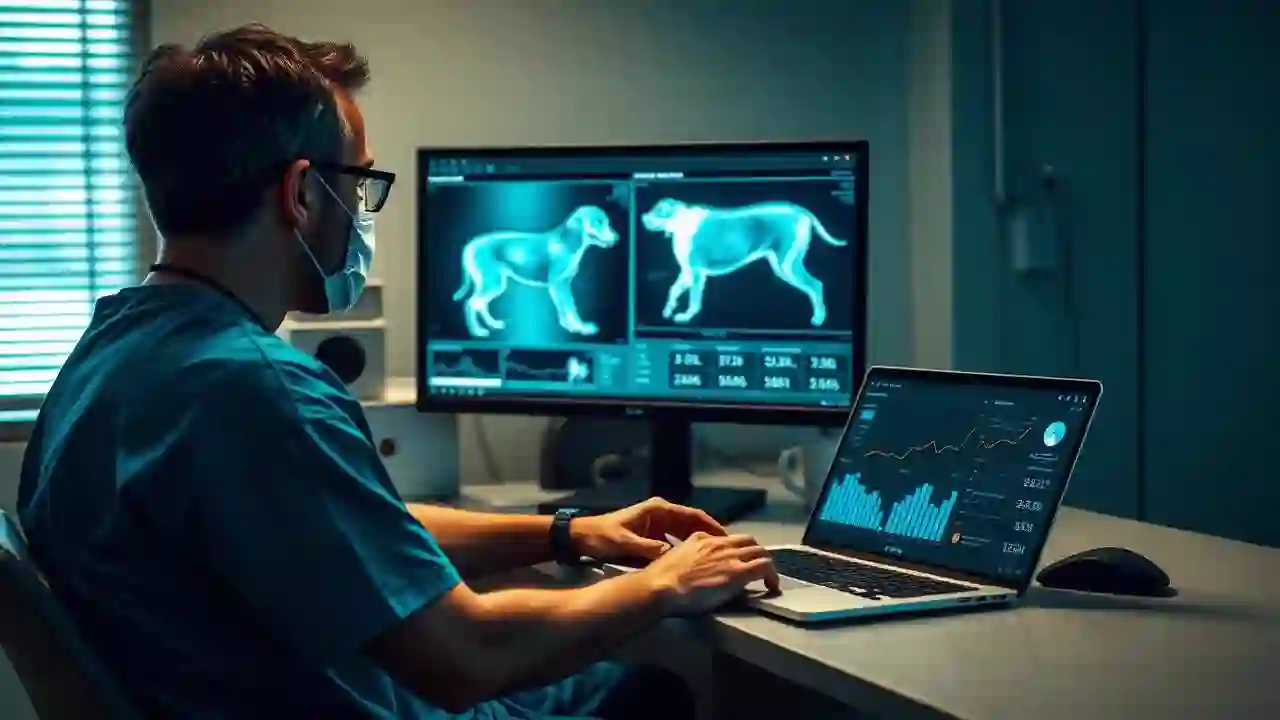
Imaging overhead eats into clinic margins fast. A digital radiography unit runs $20,000 to $80,000 up front, and every unread study behind it represents money spent without a diagnosis attached. Add missed findings, uncertain calls, and patients referred elsewhere, and imaging quietly becomes one of the largest cost centers in the practice.
Teleradiology changes that math. A board-certified radiologist reviews the study and returns an actionable report, so the clinic gets a diagnosis instead of a guess. That single step turns a fixed expense into a revenue driver, and the shift shows up fastest in three places: kept referrals, recovered labor hours, and fewer missed calls on complex cases.
Direct Revenue: Where the Dollars Actually Land
Retention comes first. When a GP can read a tricky film with confidence, the case stays in-house instead of moving to a specialty hospital across town. Every kept case keeps the full visit value: exam fee, imaging fee, treatment plan, and any follow-up work.
The math depends heavily on how the service is priced. Per-study fees suit low-volume clinics that want to test the model before committing. Subscription and monthly-minimum plans suit higher-volume practices, since the effective cost per study drops as case counts rise. A clinic reading 40 studies a month on a flat plan pays a fraction of what the same volume would cost at a per-study rate, so pricing structure is not a footnote. It is the first variable in the ROI formula.
Miriam M. Shanaman, VMD, MS, DACVR, Chief Medical Officer of RadsForVets, says, "A prompt and helpful radiology consult can save tremendous hidden costs (and time) associated with unnecessary repeat imaging studies, prolonged hospitalization or referral (when outpatient treatment or management by the primary care veterinarian would have been reasonable), or lack of clear clinical direction."
Emergency STAT reads carry their own return. A dog with a suspected GI obstruction at 11 p.m. needs a read in under an hour, not a next-day callback. Clinics that route overnight and weekend cases through a 24/7 teleradiology service avoid the choice between an expensive ER transfer and a delayed diagnosis. Referral leakage, the revenue lost when a patient moves to another practice for lack of diagnostic certainty, drops sharply once a clinic has reliable specialist backup at any hour.
Operational Efficiency: The Hours Nobody Bills For
Recovered DVM interpretative hours follow a simple formula: take the number of studies read in-house per month, multiply by the average minutes a GP spends interpreting each one, and convert that time into revenue at the clinic's hourly rate. Veterinarians generated an average of $288 in revenue per hour in 2024, according to AVMA benchmarking data. Every hour a GP spends squinting at a film instead of seeing patients is an hour billed at zero.
| Metric | GP Only | In-House Specialist | Teleradiology |
|---|---|---|---|
| Cost per Case | Low upfront, time heavy | Very high (salary, benefits) | Scalable, pay-per-use or subscription |
| Speed | Variable, depends on GP schedule | Limited to on-site hours | 24/7/365 |
| Accuracy | General practice level | Expert | Expert |
That recovered time also cuts overnight stays. A patient held for observation because a GP was not confident in the film costs the clinic a boarding slot, staff hours, and client goodwill. A same-night specialist read often clears the patient for discharge or confirms the next step immediately. Before signing a monthly-minimum contract, a clinic should run its own case-volume numbers against the plan's minimum threshold. That comparison determines whether a flat plan or a per-study plan actually saves money at current volume.
Throughput depends on more than turnaround speed. A report that buries the key finding in dense paragraphs slows the GP down just as much as no report at all. Clear structure, a plain-language impression section, and specific follow-up recommendations let a GP act on a report in minutes rather than re-reading it twice.
Tools and Analysis: Turning Data Into a Decision
The RadsForVets ROI Financial Planner takes a clinic's own numbers, monthly case volume, average GP hourly cost, and current referral-out rate, and converts them into a single monthly return figure. Instead of guessing, a practice owner sees the exact dollar gap between the status quo and a teleradiology contract before signing anything.
"I ran our numbers through the planner before the first meeting," said a clinic director who partners with RadsForVets. "Seeing recovered hours and kept referrals on one page made the budget conversation five minutes long instead of an hour."
Reading that output for a management team or ownership group means translating three figures clearly: direct revenue from kept cases, labor savings from recovered hours, and risk mitigation from fewer missed diagnoses. One necropsy-based study found a 4.6% rate of clinically significant missed diagnoses in general practice radiographs, a figure in line with 3% to 5% error rates reported in comparable human medicine studies. That gap is where diagnostic confidence becomes a retention metric in its own right: clients stay with a clinic that catches problems early, and word of that reliability spreads.
The Long-Term Payoff
The veterinary imaging market is on track to grow from $2.4 billion in 2026 to $4.0 billion by 2033, a 7.8% annual growth rate, according to Grand View Research. Clinics that build a reliable specialist workflow now capture a larger share of that growth instead of losing cases to practices that already have one.
True ROI is the sum of direct revenue, labor savings, and risk mitigation, minus the service cost. Run the numbers on kept referrals, recovered DVM hours, and reduced overnight stays before the next contract renewal. The clinics that treat teleradiology as a financial tool, not just a clinical convenience, are the ones that turn imaging from a cost center into a growth line.
References
- [1]American Veterinary Medical Association. Benchmarking data plus elevating efficiency equals practice productivity. https://www.avma.org/news/benchmarking-data-plus-elevating-efficiency-equals-practice-productivityAVMA News, October 15, 2025.
- [2]Grand View Research. Veterinary Imaging Market Size & Share Report, 2026-2033. https://www.grandviewresearch.com/industry-analysis/veterinary-imaging-market
Work with us
Board-certified reads, 1 hour STAT X-ray, every day of the year
No contracts, no minimums, and direct access to the radiologist reading your case.
