If you've shopped for remote radiology services for your practice at any point in the past few years, you've likely encountered both veterinary teleradiology and AI radiology screening being marketed with similar language. They solve different problems. Choosing the wrong one can create a disconnect between what your practice really needs and what you think you're signing up for.
Let's start with some definitions.
What Is Veterinary Teleradiology?
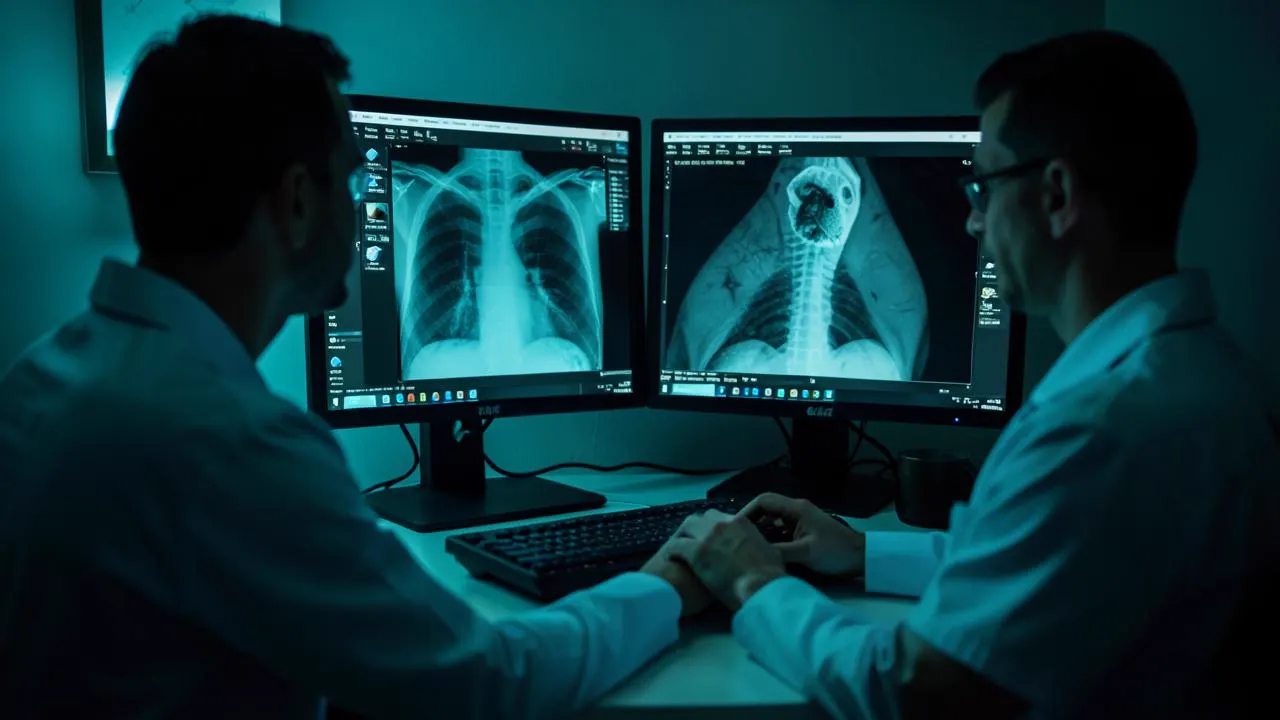
Veterinary teleradiology is the process of transmitting your diagnostic images (X-ray, CT, MR, or Ultrasound) to a board-certified veterinary radiologist somewhere else, who reads the case and returns a complete written report. A human reads every image. You're paying for expert human analysis on cases where you don't have your own radiologist on staff.
What Is AI Radiology Screening?
AI radiology screening passes your image through a model trained to identify certain patterns or abnormalities. This can happen within minutes. A radiologist does not read the case unless you specifically request a full veterinary teleradiology read on top of the AI result. You're paying for speed and a first-pass screen, not a diagnostic report from a specialist.
Where They Overlap, and Where They Don't
Some services offer both: an instant AI screen to get a quick sanity check, and full veterinary teleradiology service that routes cases to a board-certified radiologist for a complete read. The distinction matters most when a case is complicated or the outcome carries real clinical weight. An AI screen is a starting point. Veterinary teleradiology from a board-certified radiologist produces a diagnostic report you can act on and cite in your medical records.
How Do I Know Which Service I'm Actually Getting?
Certification is the line to check. Ask directly: is a board-certified human (ACVR or ECVDI) interpreting this case, or is an AI model screening the image with no guaranteed radiologist follow-up? Some services only add the radiologist layer for an additional fee, or only when you specifically request it. If you expect a board-certified read on every case, get that confirmed in writing before you commit.
When Should I Use Each?
For routine screening on a busy day, an AI pre-check can be a useful sanity check before you order more studies or commit to a treatment plan. For cases with real clinical consequences: a STAT emergency read, a finding that doesn't fit a simple category, or a patient where the treatment plan depends on getting the read right, veterinary teleradiology with a board-certified radiologist reading every case is the standard you want. Most practices use both services for different situations. The key is knowing which is which and choosing accordingly.
Does RadsForVets Use AI Screening Instead of a Radiologist?
No. RadsForVets uses ACVR or ECVDI board-certified radiologists on every case it reads, whether the case is Standard, STAT or a Wet Read. There is no AI-only tier. Every study submitted for radiology gets a full interpretation from a radiologist.
What Questions Should I Ask Before Signing Up for a Service?
Who or what is reading my images? Does board certification apply to every case, or only some cases? What exactly will I receive: a full written interpretation from a licensed radiologist, or a flagged screening result with limited context? Asking these three questions of any vendor you're considering tells you exactly which service you're buying.
Frequently asked questions
Common questions
What is the difference between veterinary teleradiology and AI radiology screening?
Veterinary teleradiology is the interpretation of your case by a board-certified veterinary radiologist who produces a full written report. AI radiology screening produces a result from a pattern-recognition model, typically without input from a radiologist.
Does AI radiology screening replace the need for veterinary teleradiology?
No. AI radiology screening is useful for certain routine cases. When a treatment decision has real consequences for the patient, a full veterinary teleradiology report from a board-certified radiologist is the appropriate standard.
Do all teleradiology providers use board-certified radiologists to interpret every case?
No. Some providers route only some cases to a board-certified radiologist. Ask directly whether board certification applies to every case you submit, or only certain ones.
Can a practice use both AI screening and veterinary teleradiology?
Yes. Many practices use AI screening for routine checks and reserve veterinary teleradiology for STAT cases or complex findings that need a board-certified radiologist's full interpretation.
What are the best questions to ask when choosing between an AI tool and a veterinary teleradiology service?
Ask who or what is reading your images, whether board certification is guaranteed for every case, and whether you're receiving a full written report or a screening result with limited context.
Related reading
Work with us
Board-certified reads, 1 hour STAT X-ray, every day of the year
No contracts, no minimums, and direct access to the radiologist reading your case.
