
Quick Summary
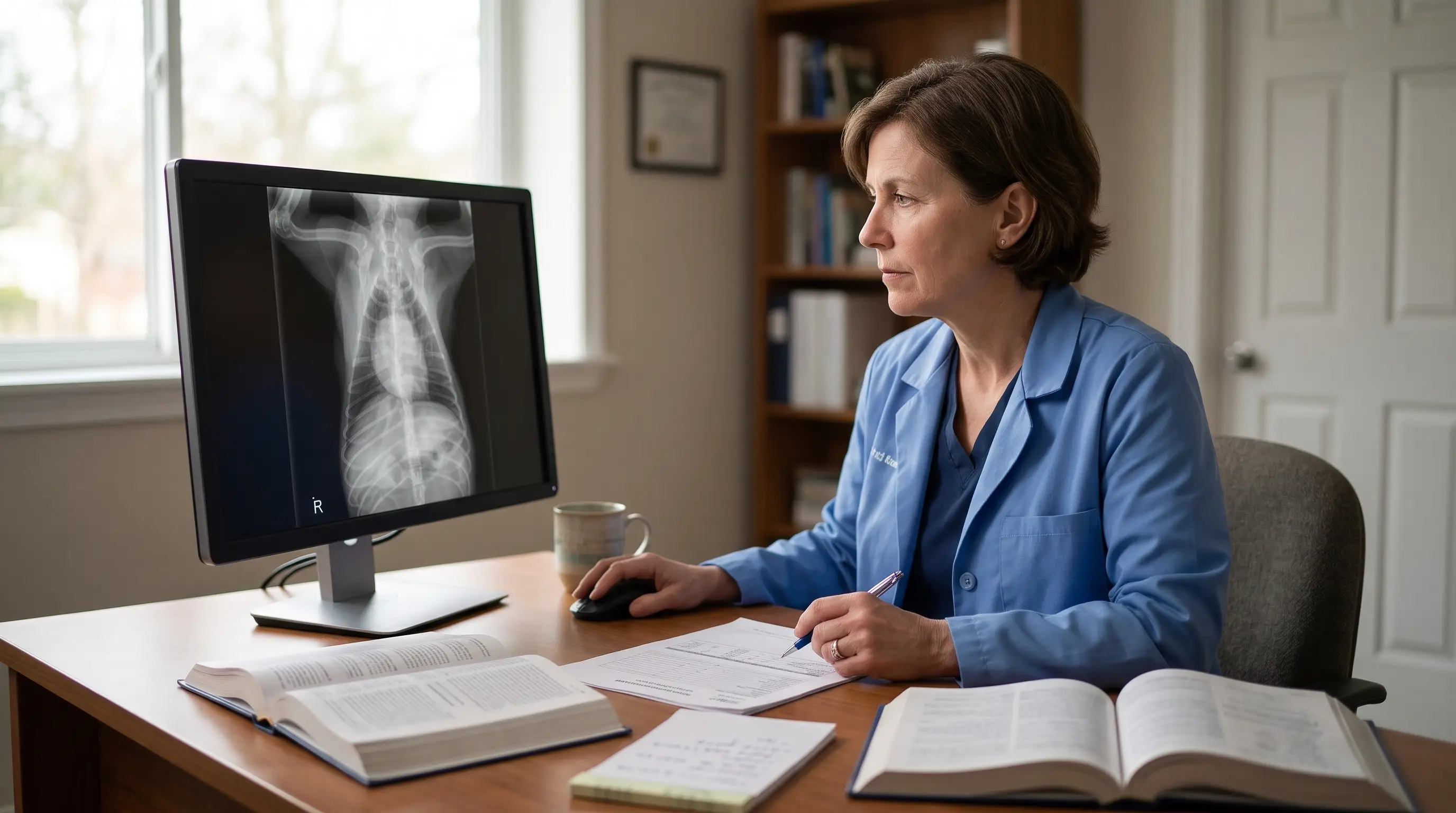
A Wet Read and a final report from the same radiologist differ in emphasis because they differ in scope: one answers targeted questions while the patient waits, the other is the comprehensive record. Read them together, document the decision timeline, and contact the radiologist through Real-Time Chat when the final report changes the plan.
- The Wet Read answers the questions you asked; the final report covers the whole study.
- The same radiologist provides the final report before shift's end.
- Record the question, the answer and its time, the decision, and the final report's time.
- Note any added findings and what you did about them.
- Use the Clinic and Radiologist tab of Real-Time Chat to discuss a difference that affects the plan.
Why The Two Documents Can Differ In Emphasis
RadsForVets defines the Wet Read this way:
Wet Read Definition
A wet-read is one where the clinic submits targeted, indication-specific questions which are specifically addressed by the radiologist. The clinic can request that the radiologist either make a call, or send a 'wet-read' report. The same radiologist will provide the comprehensive final report before shift's end.
Those two documents do different jobs. The Wet Read supports a decision now, so it addresses what you asked. The final report is comprehensive, so it addresses everything the study shows, in the order of its impression.
That is why emphasis can shift. A finding you did not ask about can appear in the final report, and a differential can be ranked after fuller review of the whole study. Our post on the wet read to the final report describes the handoff.
Reading The Two Documents Together
Open both side by side when the final report arrives. Start with the impression at the top of the final report, then return to the Wet Read and check the answer to your question. Most of the time the two agree and the final report adds detail.
- Find the question you asked and the answer you received.
- Find the same question in the final report's findings and impression.
- List any finding in the final report that was not part of your question.
- Decide whether any added finding changes today's plan.
Added findings are common and are not errors. Our posts on incidental findings and reconciling clinical and imaging findings cover how to weigh them.
Talk To A Radiologist
See how RadsForVets reads for your emergency hospital
All modalities, all priorities, every day of the year. No contract and no minimums.
What To Document In The Record
A clear timeline protects the team and the patient. It shows what was known when the decision was made. Follow your hospital's record-keeping policy, and add these items.
When The Final Report Changes The Plan
Sometimes an added finding matters today. A mass in a patient admitted for obstruction, or a thoracic finding in a patient going to anesthesia, can change what you do next. Treat that as a clinical event, not a discrepancy to file away.
- Contact the radiologist through the Clinic and Radiologist tab of Real-Time Chat.
- Ask what the finding means for the decision in front of you.
- Record the discussion and the resulting plan.
- Tell the client what changed and why, in your usual way.
"RadsForVets is a trusted extension of our medical team. What has stood out most is the accessibility of their radiologists. Our clinicians can reach a real person who knows the case, welcomes discussion, and provides practical insight."
Elaine S. Holmes, DVM, DACVS, Co-founder, Scout Veterinary Urgent Care
Real-Time Chat reaches the radiologist in seconds, with no hold. See real-time chat with your radiologist for the three-tab layout, and cases where a wet read changes the plan for examples.
Building A Standard Process For The Team
Put the routine in writing so every doctor on a shift does the same thing. A one-page process removes the question of what to do when the final report adds something.
Review the process after the first few cases with the whole team. Small changes, such as who enters the time of the call, keep the record consistent.

References
- [1]American College of Veterinary Radiology. About the College and diplomate certification. https://www.acvr.org/
- [2]American Animal Hospital Association. Accreditation and practice standards. https://www.aaha.org/
Related Reading
Talk To A Radiologist
See how RadsForVets reads for your emergency hospital
All modalities, all priorities, every day of the year. No contract and no minimums.
Frequently asked questions
Is A Difference Between A Wet Read And A Final Report An Error?
Not by itself. The Wet Read answers targeted questions and the final report is comprehensive, so emphasis can differ with scope. If a difference affects the plan, discuss it with the radiologist through Real-Time Chat.
What Should Be Documented After A Wet Read?
The question asked and when, the answer received and when, the decision made on that answer, when the final report arrived, and any added findings with the action taken.
Who Do I Contact When The Final Report Raises A New Concern?
Use the Clinic and Radiologist tab of Real-Time Chat. Questions reach the radiologist in seconds, with no hold.
Does The Same Radiologist Write Both Documents?
Yes. The same radiologist who answers the Wet Read provides the comprehensive final report.
How Long After The Wet Read Does The Final Report Arrive?
The comprehensive final report is provided before shift's end.
