A note before we start: the scenarios below are illustrative examples built to show how a Wet Read fits into a real ER workflow. They aren't documented case histories. For background on the term itself, see what a Wet Read is in veterinary radiology.
A Fast Answer Changes What Happens Next, Not Just When
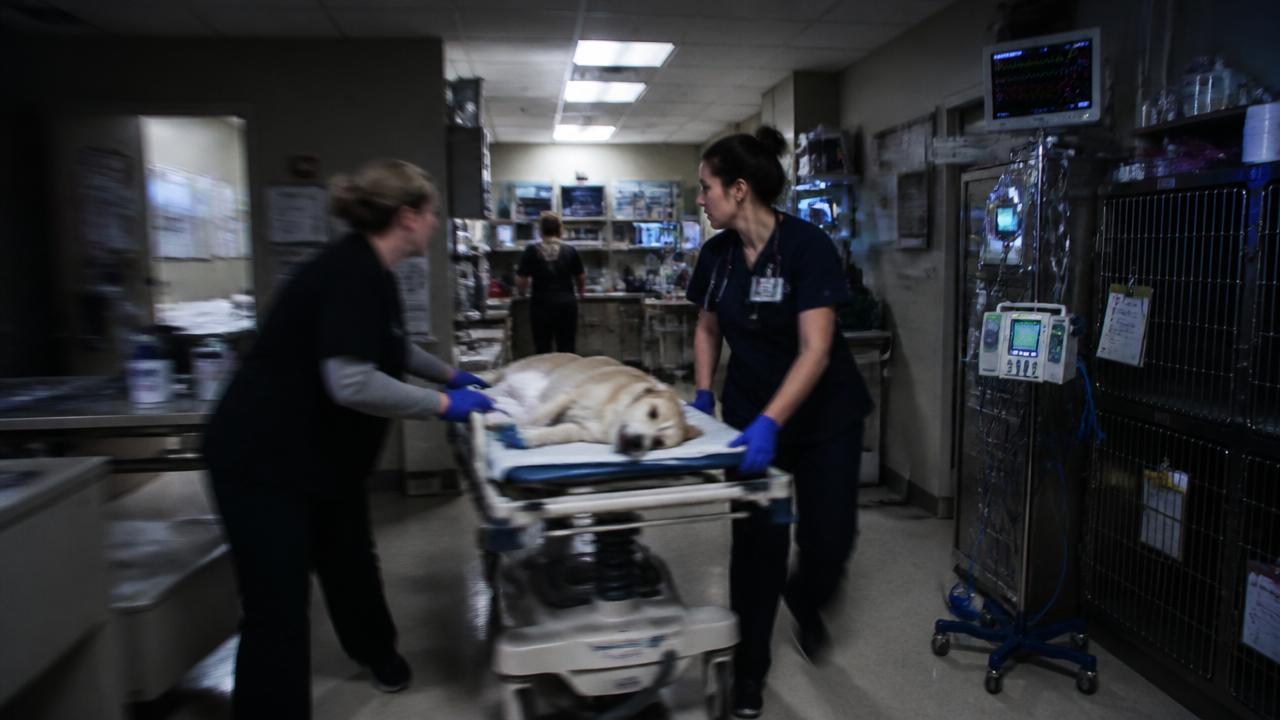
A full radiology report is valuable because it's thorough. But some moments in emergency medicine don't call for thoroughness first. They call for a direction. Here are three situations where that difference matters.
Scenario One: Suspected Foreign Body
A dog comes in vomiting, with abdominal pain. The team takes radiographs and needs to know, right now, whether surgery is the likely next step or whether the patient can be monitored and reassessed. Waiting even an hour changes the conversation with the owner and what resources the team commits to having on standby. A Wet Read gets the ER vet a board-certified radiologist's fast read on obstruction versus non-surgical findings while the team is still at the table figuring out what to prep for. The full report still follows.
Scenario Two: Suspected GDV
A large-breed dog arrives with a distended abdomen and suspected gastric dilatation-volvulus. Minutes matter here. The team needs confirmation before moving to surgery, not a report that shows up after the decision's already been made one way or another. This is exactly what Wet Read is for: a fast, top-priority radiologist read that supports the surgical call while the team is actively prepping, rather than confirming it after the fact.
Scenario Three: Trauma Triage
An animal arrives after being hit by a car, with several possible injury sites. Thoracic and abdominal radiographs go out together, and the team needs a fast read on whether there's internal injury requiring immediate stabilization or transfer, before the rest of the workup even starts. A Wet Read here supports triage in real time: what gets treated first, and whether the case needs a higher level of care than the practice can give on-site. Cases that need speed but aren't in the room waiting still fit STAT radiology reads.
The Common Thread
In each of these, the value of a Wet Read isn't that it replaces the full report. It's that a board-certified radiologist's judgment enters the decision at the moment the decision is actually being made, not afterward. The comprehensive report still comes. The Wet Read is what happens while your team is still standing there.
Frequently asked questions
Common questions
Are these real, documented patient cases?
No. These are illustrative scenarios showing how a Wet Read fits into common ER situations, not specific patient histories.
Does a Wet Read replace the full written report?
No. It gives your team a fast, top-priority answer from a board-certified radiologist while a decision is being made. The full report still follows.
What kinds of cases fit Wet Read well?
Situations where the team needs an answer immediately to decide the next step: suspected foreign body, suspected GDV, or multi-system trauma triage are common ones.
Why not just use STAT for these cases?
STAT is for urgent cases that need a fast answer but aren't in the room waiting on it. Wet Read is for the specific moment the team is standing at the table and the next step depends on the read right now.
Is a Wet Read still read by a board-certified radiologist?
Yes. Every priority level on the platform, Wet Read included, is read by a board-certified veterinary radiologist, not an automated or AI-only process.
Related reading
Work with us
Board-certified reads, 1 hour STAT X-ray, every day of the year
No contracts, no minimums, and direct access to the radiologist reading your case.