
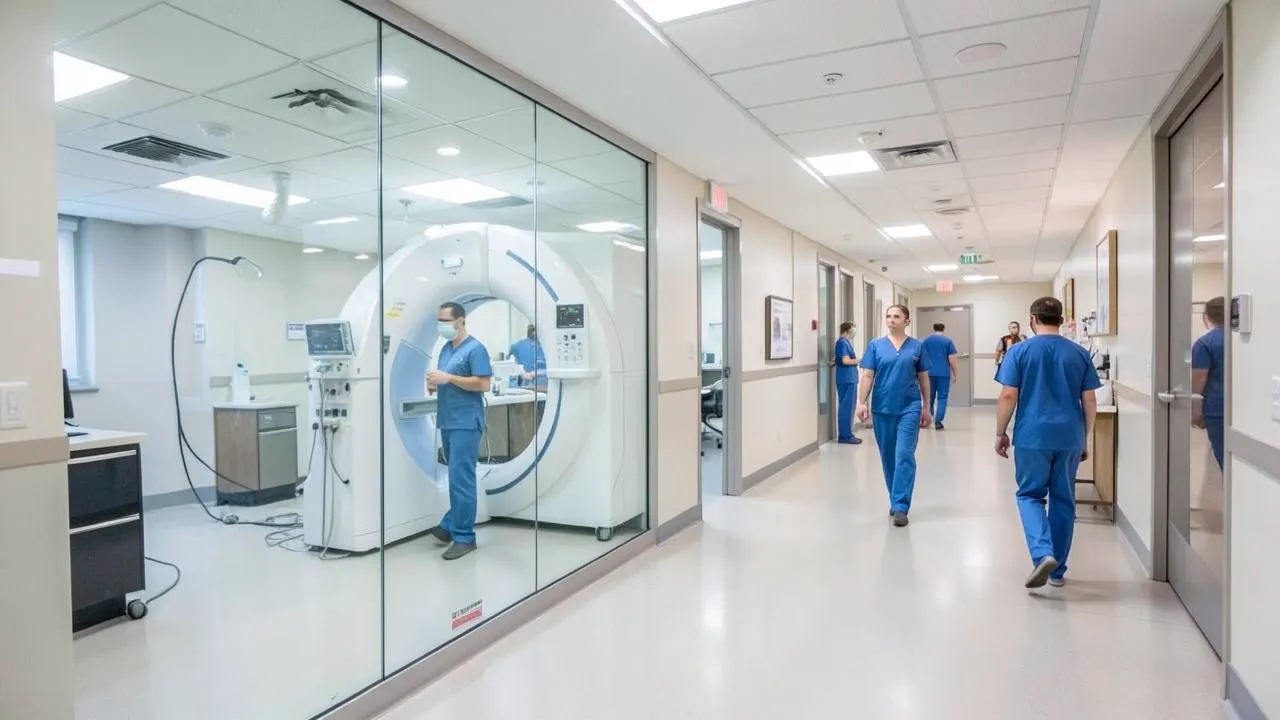
Unlike most conversations around veterinary teleradiology, specialty and referral hospitals aren't clinics sending out every radiograph. Most already have imaging equipment on-site and see a higher overall case volume. Here's how these hospitals approach veterinary teleradiology differently.
Gap Coverage vs. Replacing a Department
Your specialty hospital may have a diagnostic imaging department but not necessarily a radiologist on staff around the clock. Veterinary teleradiology serves a specific purpose here: STAT coverage during hours your in-house team isn't available, not replacing the imaging services your team already provides during the day.
A Second Opinion on Complex Cases
Referral hospitals, by definition, see a higher proportion of ambiguous, complicated cases than the average general practice. Having a board-certified radiologist review a difficult case alongside your clinical team, to confirm a finding or offer a different perspective, is one of the most common ways specialty practices use veterinary teleradiology, distinct from a general practice relying on it as the primary read.
You'll Send More CT and MR
A specialty hospital doing CT and MR as a routine part of its weekly caseload has different needs from a general practice mostly sending radiographs. When comparing pricing tiers and turnaround commitments, confirm whether a provider's advertised turnaround is based on radiographs alone, or holds up for the CT and MR studies you'll be sending regularly. The checklist for comparing imaging services is a practical way to run that comparison.
More People Need to See the Report
Just as multiple specialists may collaborate on a case, a radiology report at a specialty or referral hospital often needs to reach more than one clinician: an internist, a surgeon planning a procedure, or the referring specialist. Ask how a provider supports sharing a report and follow-up questions with more than one person on your team, not just the vet who submitted the case. RadsForVets' Real-Time Chat creates a dedicated three-tab thread for every case, connecting the clinic, the radiologist, and the Operations Team, which keeps everyone updated better than a single email chain.
Coverage for Weekend and Overnight Emergency Hours
Running your own emergency overnight or weekend service is common for specialty and referral hospitals. Veterinary teleradiology extends radiologist coverage to those hours without requiring a night-shift radiologist on payroll. RadsForVets' turnaround commitments and flat 24/7/365 pricing hold the same at 3 AM as they do during business hours.
The Bottom Line for Specialty Practices
Veterinary teleradiology isn't about replacing the imaging department you already have. It's about extending coverage to hours you can't staff, adding a specialist perspective on difficult cases, and letting your existing team focus on the caseload only they can handle in person.
Frequently asked questions
Common questions
Do specialty and referral hospitals need veterinary teleradiology if they already have an imaging department?
Often yes, to cover hours their in-house radiologist can't staff, such as overnight or weekends, or to get a second opinion on complex cases, not to replace equipment they already have.
How does veterinary teleradiology usage differ between a general practice and a specialty hospital?
General practices often rely on it as their primary radiology read. Specialty hospitals more often use it to fill overnight coverage gaps or add a second opinion on complicated cases.
Can more than one clinician on our team see a veterinary teleradiology report and ask questions?
Ask your provider directly. RadsForVets' Real-Time Chat supports multi-person coordination through a shared case thread, rather than a single email exchange.
Does veterinary teleradiology pricing work the same for high CT and MR volume as for routine radiographs?
Ask specifically. Turnaround and pricing can differ across modalities, so confirm the numbers hold up for your actual modality mix, not just a provider's fastest-quoted service.
Is veterinary teleradiology useful for hospitals that already run their own overnight emergency service?
Yes. It extends radiologist coverage to hours an in-house team can't staff, without needing a night-shift radiologist on payroll.
Related reading
Work with us
Board-certified reads, 1 hour STAT X-ray, every day of the year
No contracts, no minimums, and direct access to the radiologist reading your case.
