
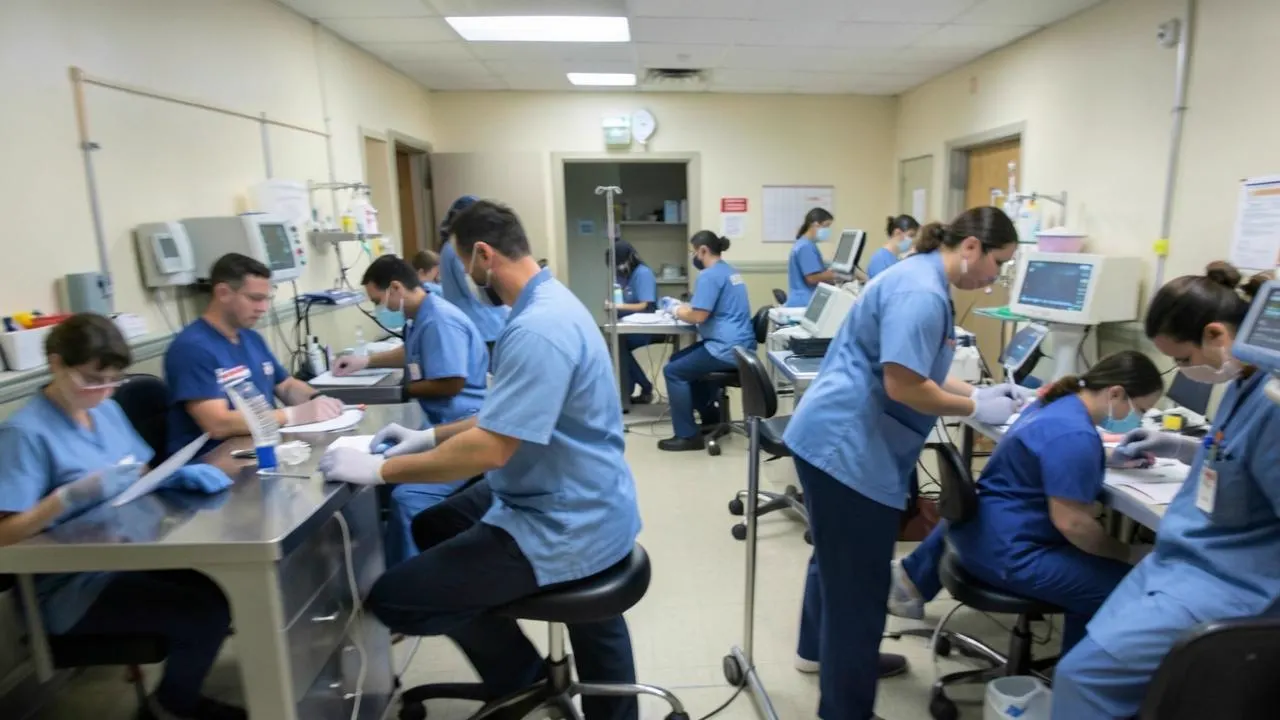
Every emergency team eventually has one of those days: a multi-car accident brings in several injured animals at once, or a single household emergency affects more than one pet. Radiographs are needed for several patients at the same time. How well your veterinary teleradiology setup handles that kind of surge matters.
STAT vs. Surge: Know the Difference
Managing one STAT case is a priority interruption. Managing three STAT cases within the same hour is different, testing both your team's ability to capture and submit images quickly and your provider's ability to read multiple urgent cases without one queuing behind another.
Questions to Ask About Surge Capacity
Ask your veterinary teleradiology provider directly what happens when multiple STAT cases from your practice arrive close together. Does each case still get the published STAT turnaround, or does volume introduce delay? A provider with a radiologist team spread across time zones generally has more capacity to absorb a surge than one relying on a single on-call radiologist. RadsForVets' radiologist team is spread globally, which supports handling multiple concurrent STAT submissions without one case queuing behind another.
Prioritizing Within Your Own Team
Even with fast teleradiology turnaround, your team needs a plan for which patient gets imaged first when several arrive at once. Standard triage applies, the most unstable patient goes first, but having a pre-agreed imaging order specifically, decided before an emergency happens, prevents confusion in the moment.
Communication Matters More, Not Less
Following up on multiple urgent cases through a single shared inbox gets confusing fast. Live channels tied to each individual case, rather than one general thread for everyone, keep questions and results from getting mixed up between patients. RadsForVets' Real-Time Chat gives every case its own dedicated three-tab thread that stays organized no matter how many cases are moving through at once.
Reviewing What Worked Afterward
Once things settle, a short internal review helps: did image submission keep pace, did reports come back within the expected window per patient, and where did the process slow down. That review is what turns one difficult day into a better protocol for the next one.
Build This Into Your Emergency Plan
If your practice handles emergency or trauma cases, your existing protocol should specifically address multi-patient imaging, not just single-patient STAT workflow. Knowing in advance how your veterinary teleradiology provider handles concurrent urgent cases is part of being genuinely prepared, not something to discover mid-event. Walking through the first hour of a single STAT case is a useful baseline before planning for several at once.
Frequently asked questions
Common questions
Does veterinary teleradiology turnaround stay the same when multiple STAT cases arrive at once?
Ask your provider directly. A radiologist team spread across time zones generally has more capacity to handle concurrent STAT cases than a provider relying on a single on-call radiologist.
How should a clinic prioritize imaging when several patients arrive during an emergency event?
Standard triage applies, most unstable patient first, but a pre-agreed imaging order decided before an emergency happens prevents confusion in the moment.
Why does communication matter more during a multi-patient veterinary teleradiology event?
Following up on several cases through one general inbox gets confusing quickly. A dedicated channel per case keeps questions and results from crossing between patients.
Should our emergency protocol specifically address multi-patient imaging?
Yes. Most emergency protocols cover a single STAT case from start to finish but don't address multiple urgent cases arriving at once.
What should we review after handling a multi-patient surge?
Whether image submission kept pace, whether reports came back within the expected window per case, and where the process slowed down, so the next event goes more smoothly.
Related reading
Work with us
Board-certified reads, 1 hour STAT X-ray, every day of the year
No contracts, no minimums, and direct access to the radiologist reading your case.
