
Practice Operations

6 Signs Your Practice Is Ready for Veterinary Teleradiology

Veterinary teleradiology is usually adopted after the same operational patterns repeat for a few months. Here are six practical signs a practice can score against its own last quarter.

11 min read
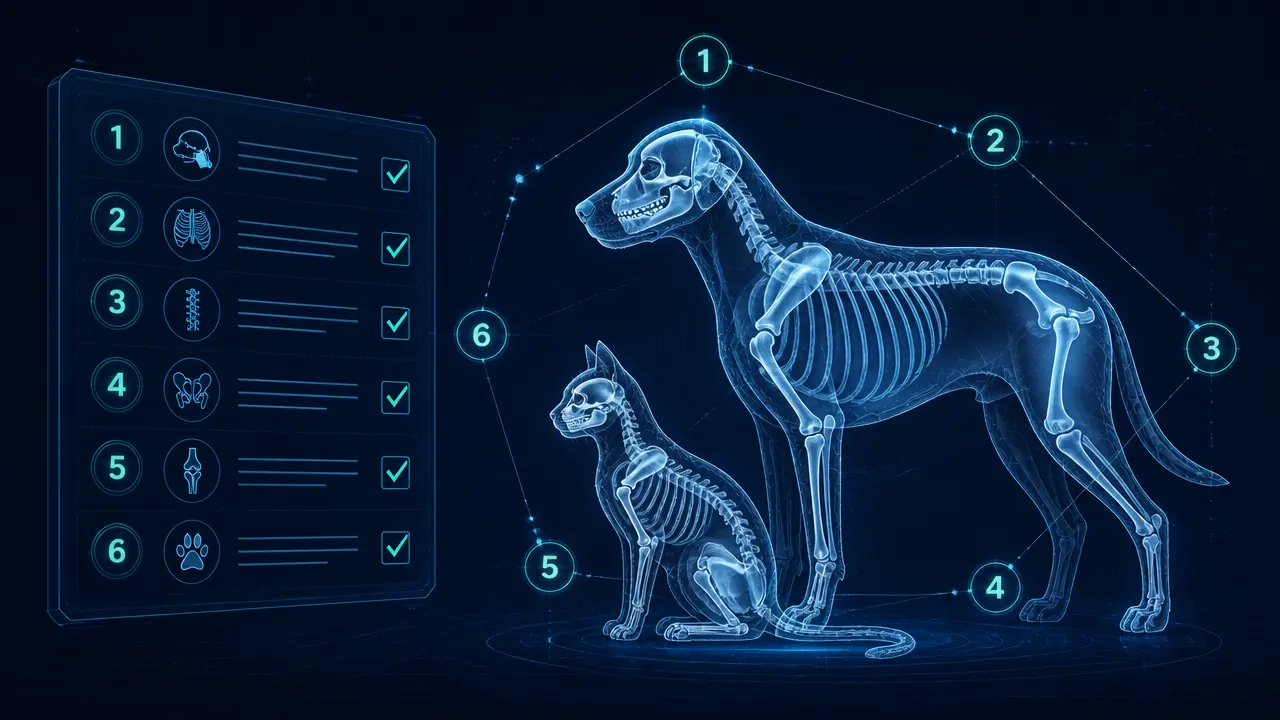
Cover image for the article 6 Signs You're Ready for Teleradiology

Veterinary teleradiology is the remote interpretation of veterinary imaging studies by board-certified radiologists: images are acquired at the practice, transmitted electronically, and returned as a written specialist report. Most general practices do not adopt veterinary teleradiology because of one memorable case. They adopt it because the same handful of operational patterns keep repeating, and at some point somebody puts a name to them. The six signs below are those patterns, written as a self-assessment you can score against your own last three months rather than as a recommendation.

Key takeaways

  • Readiness is about repeating operational patterns, not one dramatic case.
  • Score each of the six signs against your own last three months, honestly.
  • Two or three clear matches is the point where most practices start evaluating properly.
  • Vet teleradiology sits alongside a local specialist relationship rather than replacing it.
  • A no-contract, no-minimum model means a single routine study is a complete trial.

How to use this checklist

Read each sign and answer one question: has this happened more than twice in the last three months. Not once, and not hypothetically. Signs that fire repeatedly are describing a structural feature of how your practice runs; signs that fire once are describing a bad week. The wider context on why remote reads have become a standard part of practice imaging is set out in why veterinary teleradiology is becoming standard in US practice, which is worth reading alongside this checklist.

1. Your imaging case volume is unpredictable month to month

A practice that images fifteen cases one month and forty the next cannot staff to the average. Seasonal emergency peaks, a new referral relationship, or a single busy fortnight all move the line, and any arrangement that assumes a stable monthly number will be wrong in both directions.

What this looks like in practice

  • Sessional or contracted specialist time works out well in busy months and poorly in quiet ones.
  • Some weeks the imaging backlog clears itself; other weeks it does not clear at all.
  • You cannot forecast next quarter's imaging spend with any confidence.

Variable volume is the specific situation a per-study model handles well: a quiet month costs what a quiet month should cost, and a sudden run of cases is absorbed by a radiologist pool rather than by one person's diary.

2. There is no in-house specialist cover overnight or at weekends

Very few general practices have a board-certified radiologist on site, and almost none have one available at 02:00 on a Sunday. The question is not whether you have that cover, but how often its absence changes what happens to a patient overnight.

Score this sign if

  • Studies acquired in the evening routinely wait until the next working day for specialist review.
  • Overnight stabilisation and transfer decisions are made on a provisional read.
  • Weekend cases are held rather than progressed.

Continuous cover is achievable remotely because a group rotates radiologists across shifts. Our own team is roughly 27 to 28 board-certified veterinary radiologists, most in the United States with a handful in Europe, Australia and Brazil, which is what allows 24/7 STAT reads every day of the year.

3. Referring clients or owners are asking for faster turnaround

When an owner is waiting for an answer before consenting to anaesthesia, or a referring practice wants a report the same evening, turnaround becomes part of the clinical service rather than an administrative detail. If those requests are arriving more often than your current route can satisfy, that gap is the sign.

Study typeSTATRoutine
Radiographs (X-ray)About 1 hourWithin 24 hours
CTAbout 4 hoursWithin 24 hours
UltrasoundAbout 4 hoursWithin 24 hours
MRIAbout 4 hoursWithin 24 hours
Turnaround tiers RadsForVets publishes, as a reference point for what to ask any provider.

Ask any provider for tiers stated per modality rather than a single blended average, because reading time genuinely differs between a three-view thorax and a contrast CT.

4. CT, ultrasound and MRI are going out through ad hoc routes

Radiographs go one way, the occasional CT goes to whoever answered last time, and ultrasound depends on which visiting sonographer is around. That fragmentation is common and it is survivable, but it makes turnaround unpredictable for exactly the studies that cost the most to acquire and carry the most diagnostic weight.

Score this sign if

  • Different modalities follow different submission routes and different report formats.
  • Prior studies live in more than one place, so progression questions are hard to answer.
  • Nobody can say confidently when a cross-sectional report will arrive.

Consolidating every modality onto one veterinary teleradiology platform means one submission route, one set of urgency tiers and one archive. How the study physically leaves your modality matters more than most practices expect, and the submission step goes through the DICOM auto-send versus manual export question in detail.

5. You want a second specialist opinion without a full referral

There is a wide band of cases where a full referral is more than the situation needs but your own read would benefit from an independent specialist survey. Equivocal findings, an incidental change you want characterised, a pre-surgical anatomy question, or a case where the imaging and the patient do not quite agree.

Board certification in veterinary radiology requires a dedicated residency in diagnostic imaging after the veterinary degree, followed by certifying examinations set by the American College of Veterinary Radiology. That is the training a specialist consultation adds on top of your own interpretation. The American Veterinary Medical Association maintains the wider professional and record-keeping standards that specialist reports sit within.

6. You want predictable per-study pricing without a contract

Practices increasingly want imaging interpretation costed the same way as a laboratory panel: a known price per study that can be built directly into the client estimate, with no monthly commitment sitting behind it.

What to confirm before you start

  • A per-study price list broken down by modality and urgency tier.
  • Whether any contract, sign-up fee, monthly minimum or volume tier applies.
  • Whether unused capacity in a quiet month carries any cost at all.

RadsForVets charges per completed case with no contract, no sign-up fee and no case minimum, which is one of the reasons remote reads have spread as quickly as they have across general practice, as covered in our piece on veterinary teleradiology becoming standard.

Scoring the six signs

Count how many of the six describe your last three months rather than a single bad week.

Signs matchedWhat it usually means
0 to 1Your current arrangement is probably fine. Revisit if your imaging mix changes.
2 to 3Worth evaluating properly. Most practices adopt vet teleradiology in this band.
4 to 5The operational conditions are already there; the main question is which provider.
6Imaging decisions are regularly waiting on access you do not currently have.
A rough reading of what your score suggests.

If you decide you are ready

  • Start with one routine study of a stable patient, not a live emergency.
  • Confirm turnaround tiers per modality and get the per-study price list in writing.
  • Check that every reader is a board-certified veterinary radiologist.
  • Agree internally who submits, and what history goes with each study.
  • Run one test submission end to end so the whole team has seen the route once.

If two or more signs matched, a short conversation is usually more useful than a formal procurement exercise. You can talk to a radiologist or book a demo and walk a recent case through from submission to report before you commit to anything.

Frequently asked questions

Common questions from practices evaluating veterinary teleradiology services for the first time.

Terminology and providers

What are veterinary teleradiology companies, and how are they different from an in-house radiologist?

Veterinary teleradiology companies are groups of board-certified veterinary radiologists who interpret imaging studies remotely. Images are transmitted electronically from the practice, a radiologist reviews them wherever they are on shift, and a written report returns to the case. An in-house radiologist works on site and is available during rostered hours; a teleradiology group draws on a pool of radiologists across shifts and time zones, which is what makes continuous overnight and weekend coverage possible without on-site staffing.

What does 'teleradiology services' mean in veterinary medicine?

It means the remote interpretation of diagnostic imaging: radiographs, CT, MRI, ultrasound and fluoroscopy acquired at one location and read by a specialist at another. In veterinary medicine the practical package usually includes a secure upload route for DICOM studies, urgency tiers that set a turnaround deadline, a structured written report with findings and an impression, and a way to ask the reading radiologist a follow-up question.

What kind of practices do vet telerad companies typically serve?

General practices with radiography and no on-site specialist, emergency and urgent care clinics needing overnight reads, mixed practices adding ultrasound or CT, mobile imaging providers, and specialty hospitals wanting extra capacity at peaks. Practice size matters less than whether imaging decisions regularly need a specialist opinion sooner than a local referral appointment can be arranged.

What are vet teleradiology providers, exactly?

A vet teleradiology provider is the organisation that supplies both the radiologists and the software route that carries the study to them. That includes the submission platform, the urgency tiers, the report format, the archive of prior studies, and the communication channel back to the reader. Assessing a provider means assessing all of those together, not just the credentials of the readers.

Is 'vetmed teleradiology' the same thing as veterinary teleradiology?

Yes. 'Vetmed teleradiology', 'vet med teleradiology' and 'vet teleradiology' are all informal shorthand for the same discipline: remote specialist interpretation of veterinary diagnostic imaging. The wording varies by region and by who is writing; the service being described is identical.

What is a veterinary teleradiology group?

A group is simply a team of veterinary radiologists reading together under one operational structure, rather than a single independent radiologist taking cases directly. Working as a group is what allows shift rotation, sub-specialty routing of unusual cases, second-reader input, and cover for holidays and absence. RadsForVets is a group of roughly 27 to 28 board-certified radiologists, most based in the United States with a handful in Europe, Australia and Brazil.

Deciding whether you are ready

How do I know if my practice is ready to adopt veterinary teleradiology?

Readiness is mostly about repetition rather than volume. If you can name several occasions in the last quarter where an imaging answer was needed before a local specialist appointment could be arranged, where a study was held overnight, or where cross-sectional imaging was sent out through an ad hoc route, the operational conditions are already there. The six signs in this article are designed to be scored honestly against your own last three months.

What does it typically cost to start using a veterinary teleradiology service?

With a per-study model there is no start-up cost as such: the practice pays for each interpretation it submits, priced by modality and urgency tier. RadsForVets has no contracts, no sign-up fee and no case minimums, so the cost of trying the service is the cost of the first case. Ask any provider for a per-study price list by modality and urgency so you can build it into your own fee schedule before you begin.

Does adopting veterinary teleradiology replace my relationship with a local specialist?

No. The two answer different questions. Teleradiology gives you a specialist imaging interpretation quickly, wherever you are. A local specialist provides hands-on examination, procedures, surgery and ongoing case management. In practice a remote read often sharpens a referral by telling the receiving specialist what to expect, or confirms that a referral is not needed yet.

How long does it take to get set up with a veterinary teleradiology service?

For a browser-based platform, usually the same day. The practical steps are creating practice and user accounts, agreeing how studies leave your modality or PACS, and running one test study end to end so the team sees the whole route once before a live case depends on it. Configuring an automatic DICOM send from the modality takes longer to arrange but removes manual export later.

How practices actually start

What's usually the first case type a practice submits when it starts?

Most often a routine radiographic study of a stable patient: a thorax or an abdomen where the clinician already has a working read and wants the specialist report as a comparison. Starting on a non-urgent case lets the team learn the upload, history and urgency-tier steps without a clock running, which makes the first genuine STAT submission much calmer.

Do multi-doctor practices use veterinary teleradiology differently than solo practices?

Usually yes. Solo practices tend to use it as their standing specialist opinion across most modalities. Multi-doctor practices tend to use it selectively and set internal conventions about who submits, what history is included and which cases go STAT, so that reports are consistent regardless of which clinician sent the study.

Is veterinary teleradiology only useful for emergency or urgent cases?

No. Urgent cases are the most visible use, but a large share of submitted volume is routine: staging studies, orthopaedic assessments, recheck comparisons against prior imaging, pre-anaesthetic thoracic screening, and cross-sectional studies where a systematic specialist survey adds most. Routine studies of any modality are returned within 24 hours.

What should a practice manager ask before signing up with a veterinary teleradiology service?

Ask for turnaround tiers stated per modality rather than a single average, confirmation that every reader is board-certified, a per-study price list, the species covered, what happens to prior studies and whether they remain accessible, how a follow-up question reaches the reading radiologist, and whether any contract or monthly minimum applies.

Can a practice try veterinary teleradiology before committing to it regularly?

Yes, where the provider has no contract and no case minimum. In that model a single study is a complete trial: you can submit one routine case, read the report, judge the clarity of the impression and the ease of the submission route, and decide from there. RadsForVets is set up this way deliberately.

Does practice size determine whether veterinary teleradiology makes sense?

Not on its own. A two-vet practice with a CT scanner may need specialist interpretation more often than a larger practice doing mostly radiographs. The better predictors are imaging mix, opening hours, how far away the nearest specialist is, and how often a decision has to be made before a referral appointment is available.

Related reading

Work with us

Board-certified reads, 1 hour STAT, every day of the year

No contracts, no minimums, and direct access to the radiologist reading your case.

Contact our team