
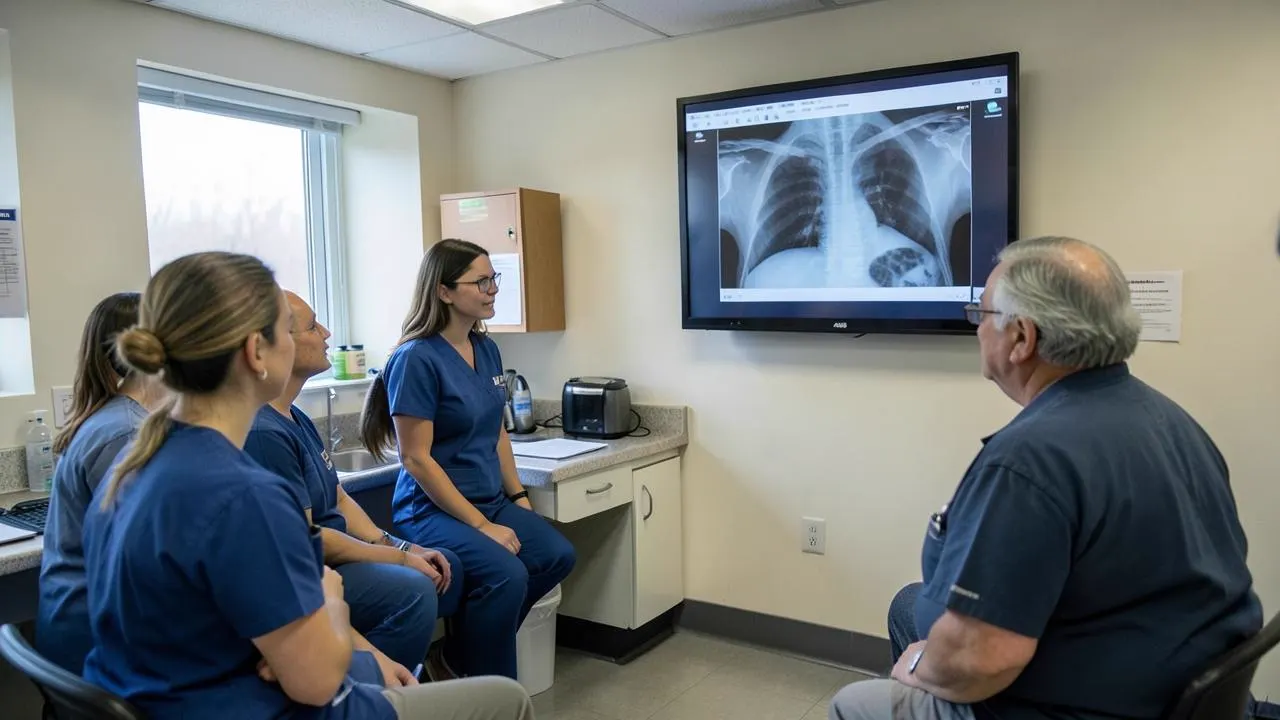
A veterinary teleradiology report is usually treated as a use-it-and-move-on resource: open it, read the diagnosis, treat the patient, move to the next case. That stack of old reports is also one of the most useful teaching tools your practice already has.
Why Past Reports Make Great Teaching Material
Real cases from your own practice are more relevant to your team's daily work than a generic textbook. A newer associate or a tech learning to recognize patterns benefits more from a concrete case they can compare to what they saw in the exam room than from a reference image with no connection to their actual caseload. Pairing that with an overview of what a veterinary radiologist does gives newer staff useful context for how a report is put together.
Video-Enriched Reports Are Especially Useful
When a radiologist includes a short video walking through a finding, that visual explanation of the reasoning is often easier for a junior team member to follow than a written description alone. RadsForVets includes videos on reports where a walkthrough adds real diagnostic clarity, and practices report using these specifically as a teaching tool for newer veterinarians and technicians.
Building Your Own Library of Past Cases
You don't need anything elaborate. A shared folder organized by finding type, a few notable thoracic cases, a few abdominal cases, turns your veterinary teleradiology history into a reference library specific to your practice. Over time, this becomes more useful than a generic textbook because it reflects the cases your clinic actually sees.
Make Reviewing Cases Part of Regular Meetings
Taking a few minutes to discuss an interesting past case during a regular team meeting sharpens the pattern recognition of the whole team, not just the person who submitted the study. This works especially well for cases where the initial impression differed from the radiologist's findings.
Consider Patient Privacy
If you share past cases more broadly, keep it internal to your practice and don't include anything beyond what your team already has access to.
Veterinary Teleradiology Reports Are More Than Reports
Practices that treat their veterinary teleradiology reports as simply another item in the patient workflow are missing out. Taking a few minutes to review old cases helps your whole team learn from every case you submit, not just the ones with tricky findings. The questions worth asking before a consultation work well as a discussion prompt in those sessions.
Frequently asked questions
Common questions
Can veterinary teleradiology reports actually be used to train staff?
Yes. They're real cases your team already sees, which makes them more applicable for training than generic reference material.
Why are video-enriched veterinary teleradiology reports especially useful for training?
A short video walkthrough shows the radiologist's reasoning, not just the conclusion, which is often easier for a team member who wasn't involved in the case to follow than a written description alone.
How do I start building a library of past cases?
Create a shared folder and sort cases by finding type. Over time, it becomes more valuable than a generic textbook because it's filled with cases your practice actually sees.
Should I discuss cases during team meetings?
Yes. Taking a few minutes to present an interesting case or a tricky finding is a good way to sharpen the team's pattern recognition, especially for cases where the initial impression didn't match the radiologist's report.
What should I keep in mind before sharing cases with my team?
Treat case files the way you would patient records. If sharing internally, don't include anything beyond what your team already has access to.
Related reading
Work with us
Board-certified reads, 1 hour STAT X-ray, every day of the year
No contracts, no minimums, and direct access to the radiologist reading your case.
