
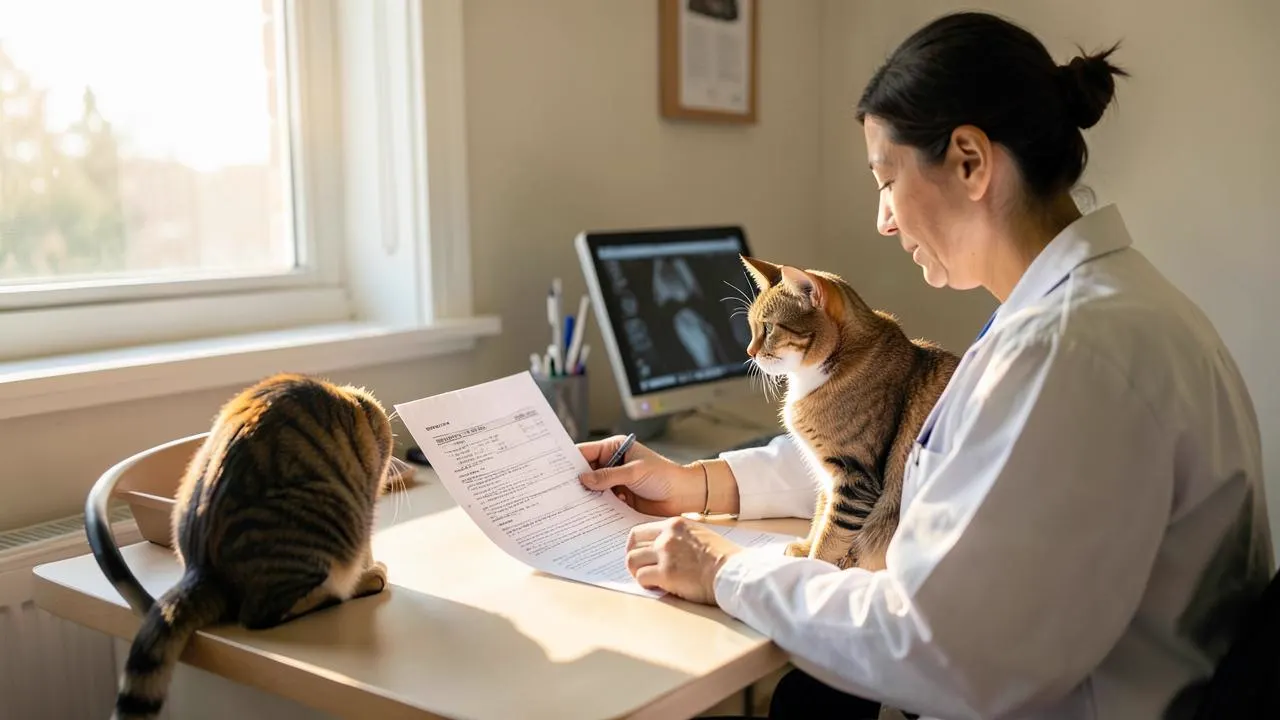
Most veterinary teleradiology advice focuses on preparing and submitting the case. Less gets said about what to do after the report arrives, which is where the diagnostic value actually turns into patient care.
Read the Whole Report
A well-structured veterinary teleradiology report leads with prioritized diagnoses and recommendations first, then supports those findings with detailed imaging evidence. That format serves a purpose, it gets you to a decision quickly. But especially after multiple views or a full-body study, the detailed findings section can include incidental observations that didn't drive the original reason for the case but are still relevant to the patient's care.
File the Report Promptly
A report sitting in an inbox doesn't help anyone. If your provider integrates directly with your practice management system, confirm the report actually landed in the correct case file — RadsForVets injects reports directly into the matching radiology order inside ezyVet and Instinct, and is actively adding more PIMS integrations. If it arrives separately, build a habit of attaching it to the patient record before the end of the shift, not whenever there's time.
Explain the Report to Your Client Clearly
Translating a radiologist's findings for a pet owner who doesn't know medical terminology is its own skill. Start with what the finding means for their animal's treatment. RadsForVets includes a video walkthrough from the radiologist on cases where it adds real clarity, which is often easier to use when explaining things to a client than the written findings alone.
Ask Follow-Up Questions While the Case Is Fresh
If anything in the report is unclear, ask right away rather than after the fact. RadsForVets keeps a dedicated Real-Time Chat thread open for exactly this, connecting your clinic directly to the radiologist who read the case.
Share Findings With Your Team
If more than one person on your team is involved in the patient's care, make sure the report and its implications actually reach them, not just get filed. A finding that changes the treatment plan needs to reach whoever is carrying it out, not just whoever submitted the case.
Close the Loop When You Can
Following up with the radiologist about a patient's outcome, particularly for unusual cases, isn't required, but it's good practice. It helps if the case needs to be sent out again later, and it builds the kind of relationship that makes future consultations more useful. What a radiologist consultation actually covers sets expectations for those conversations.
Frequently asked questions
Common questions
Should I read the full veterinary teleradiology report or just the summary?
Read the whole report. The summary gets you to a decision fast, but the detailed findings section can include incidental observations still relevant to the patient's care.
How quickly should a veterinary teleradiology report be added to the patient record?
As soon as possible, ideally before the end of the shift. A report that sits unfiled doesn't help future care decisions for that patient.
What's the best way to explain a veterinary teleradiology report to a pet owner?
Lead with what the finding means for the animal's treatment rather than imaging terminology. A video walkthrough, when available, is often easier for clients to follow than written findings alone.
What should I do if something in a veterinary teleradiology report is unclear?
Ask right away, while the case is fresh. A live channel tied to the specific case gets a faster, more accurate answer than a general inbox.
Does everyone on my team need to see a veterinary teleradiology report?
Anyone involved in carrying out the treatment plan should see it, not just whoever submitted the case.
Related reading
Work with us
Board-certified reads, 1 hour STAT X-ray, every day of the year
No contracts, no minimums, and direct access to the radiologist reading your case.
