
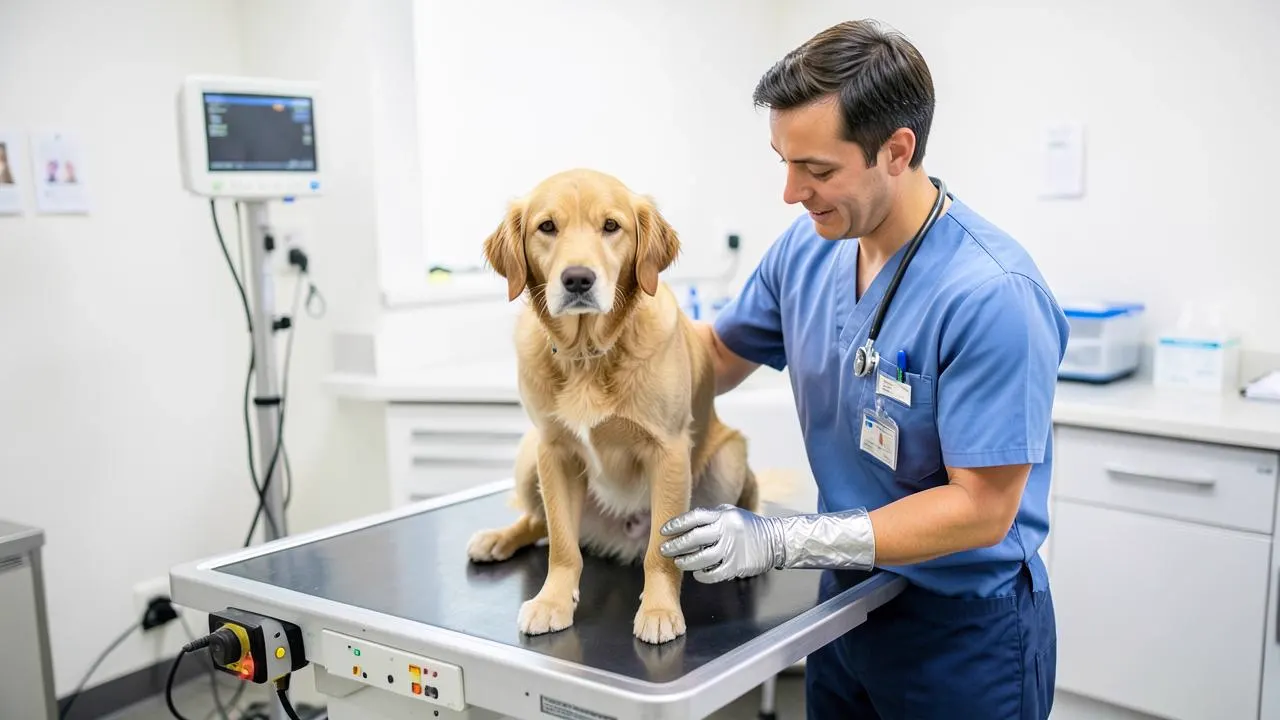
The accuracy and turnaround time of your veterinary teleradiology reports are directly related to how you prepare images before submitting them. Taking a few extra minutes at capture saves your entire team time later while waiting on a report.
Position the Patient Correctly
A radiologist can only evaluate what's on the image. Poor positioning, a truncated field of view, or an oblique angle instead of a true lateral can obscure or change the appearance of a finding that would be obvious with proper positioning. If you have any doubt a view is adequate, taking a second image is almost always faster than waiting for the radiologist to ask you to.
Always Get More Than One View
A single radiographic view is rarely enough to rule a finding in or out. Standard orthogonal views, two angles at minimum, let a radiologist understand spatial relationships a single view can't show. Submitting one view when multiple are standard for that study type is one of the most common reasons veterinary teleradiology reports come back asking for additional images.
Check Your Exposure and Technique
Underexposed or overexposed studies make subtle findings harder to identify, sometimes impossible to assess reliably. Use the correct technique settings for the patient's size and the body part being imaged. This matters even more for veterinary teleradiology, since the radiologist can't ask you to point to the area of concern on the actual patient. The same principle applies to cross-sectional work, as the guide to veterinary CT interpretation explains.
Add Clinical History When Possible
Diagnostic images are easier to interpret when the radiologist knows why the study was taken. Include the presenting complaint, relevant history, and specific concerns. It's the difference between a radiologist reading "vomiting, 3 days, senior dog" alongside an abdominal series versus reading the image with no context at all.
Label It Properly
Label the study with the correct patient, the correct body part, and the correct priority (Standard, STAT or Wet Read). Studies come back needing additional views every day because they were marked with the wrong body part or no priority at all. Take a second to verify labeling before submitting.
Triple-Check Before You Submit
A quick check before submitting a case drastically reduces how long your team waits for a report that has to be repeated or comes back with questions. Right patient, right views, right exposure, history included, priority marked. That's all it takes. The submission step most clinics get wrong covers where that check usually breaks down.
Frequently asked questions
Common questions
Why does image quality matter for veterinary teleradiology specifically?
A radiologist cannot assess the patient any other way than what's on the image. They can't palpate the animal or ask you to point to where it hurts. Poor positioning or exposure can hide a finding until a properly captured repeat image shows it clearly.
How many views should I submit for a veterinary teleradiology case?
As many as are standard for the body part and suspected condition, typically at least two orthogonal angles. Submitting only one view when your protocol calls for two is a leading cause of reports coming back requesting more images.
Does clinical history actually change how a veterinary teleradiology report comes back?
Yes. Including the presenting complaint and relevant history helps the radiologist focus the interpretation, rather than reading the image with no context at all.
What mistakes do clinics make most often when submitting to a veterinary teleradiology provider?
Mislabeling the patient, marking an unclear priority, and submitting one view when multiple are indicated. A quick check before submitting catches all three.
If I'm not sure I got a good view, should I resubmit before or after getting the report back?
Before. It's always better to capture a second image and wait a bit longer for the report than to wait for the radiologist to request a repeat after reviewing a suboptimal image.
Related reading
Work with us
Board-certified reads, 1 hour STAT X-ray, every day of the year
No contracts, no minimums, and direct access to the radiologist reading your case.
