
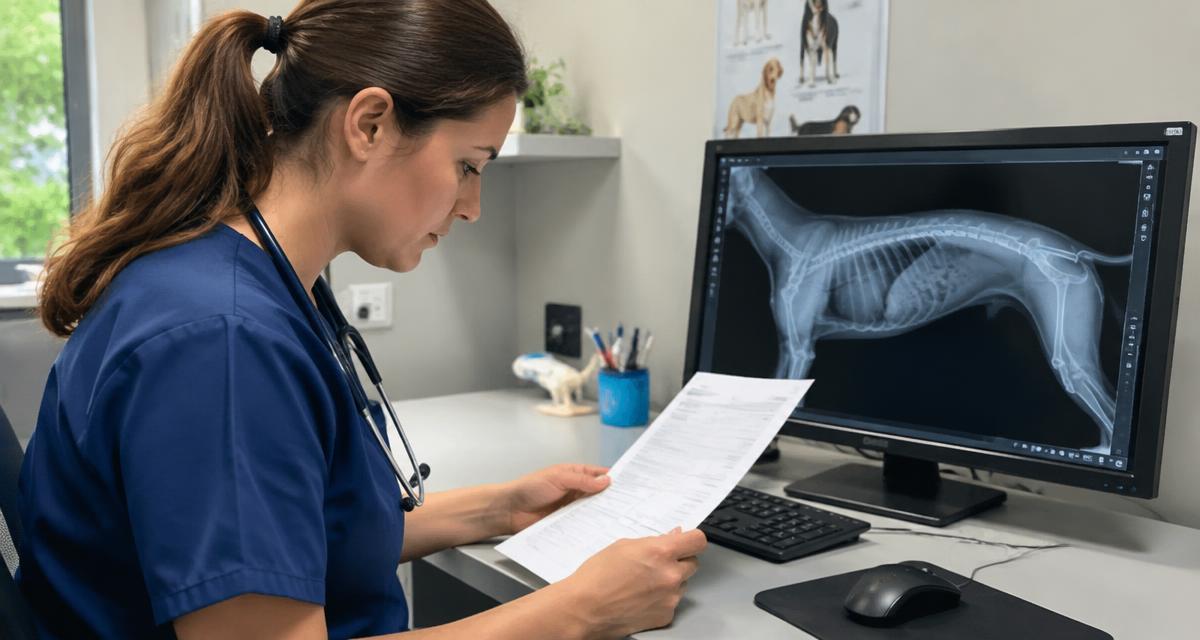
Two reports can contain identical information and be worth very different amounts in practice. The difference is where the conclusion sits.
That single structural decision separates a report the team reads from one it skims. The order below is the one that works, followed by what belongs in each part and how to use a report at the table.
The Order That Works
- Prioritized diagnoses and recommendations.
- Comprehensive findings, described systematically.
- Limitations and suggested additional imaging, where relevant.
This is the structure of a journal abstract, and it is the structure RadsForVets uses on every report.
The order is not stylistic preference. It mirrors how clinical decisions are made: conclusion first, evidence second, caveats third. A report that reverses the order asks a working team to reconstruct the conclusion themselves from the findings, which is the one task they were hoping the report would do.
Prioritized Diagnoses First
The clinician opening a report often has a patient in front of them and a client waiting. Leading with the conclusion means the first thing read is the thing that changes what happens next. More on the reasoning is in impression-on-top reporting.
Prioritized is as important as first. The impression does not list every observation with equal weight; it ranks what matters to the question asked, so the second sentence is already more specific than the first. Recommendations then attach to the ranked findings, which turns the top of the report into a plan rather than a summary.
Comprehensive Findings
Detail is not optional. It supports the conclusion, documents the study for the record, and gives the next clinician a baseline. It simply belongs after the answer, not in front of it.
Good findings sections are systematic: each region described once, negatives included where they bear on the question, measurements given where they matter. This is also the part that earns its keep later, when a case is rechecked and the baseline matters.
Naming the Limits
A report that says what the study could not resolve, and what would resolve it, saves a second round of guessing. Positioning, additional views, or a different modality are all worth stating plainly.
Naming a limit is not a disclaimer; it is a direction. If oblique views would resolve the question, the report says so, and the next submission is better than the last one. Over a few studies this turns the report into part of the practice's learning loop.
Reading One at the Table
Read the top, act, then read the rest. If something is unclear, Real-Time Chat on the case reaches the radiologist in seconds. Around 40% of reports also carry a short video from the radiologist, which is often the fastest way to show a client what the images show.
The video, when there is one, is worth thirty seconds before a client conversation: the radiologist pointing at the frames behind the conclusion is easier to relay than a paragraph of findings, and clients follow it.
Delivering the Report
A well-structured report should not create filing work. Delivery belongs in the same workflow as the rest of the record, which is why injection into the matching radiology order in ezyVet and Instinct matters as much as the writing: the structure arrives intact, in the right place, without re-filing.
Frequently asked questions
Common questions
What should a radiology report open with?
The conclusion. A RadsForVets report leads with prioritized diagnoses and recommendations, followed by comprehensive findings.
Why does the order matter?
A clinician reading at the table needs the answer in the first few seconds. Detail placed after the conclusion is still read, just not first.
What belongs in the findings section?
Systematic description of what the images show, including negatives that matter to the clinical question.
Should a report state what it cannot answer?
Yes. Naming the limits of a study, and what additional views would resolve them, is part of a useful report.
Do reports include video?
Around 40% of RadsForVets reports include a short video from the radiologist walking through the images.
How does the report reach the record?
It is available on the platform and injects into the matching radiology order in ezyVet and Instinct.
What if the report raises a question?
Real-Time Chat on the case reaches the radiologist in seconds, rather than through voicemail or email.
What is the difference between an impression and a summary?
An impression ranks the findings that answer the clinical question and attaches recommendations to them. A summary restates everything with equal weight.
How long should a report take to act on?
Long enough to read the top. The prioritized diagnoses and recommendations at the beginning carry the decision; the findings below support them.
Should the report follow a template?
It should follow a consistent structure, with prioritized diagnoses and recommendations first, comprehensive findings next, and limitations stated where relevant.
Related reading
Work with us
Board-certified reads, 1 hour STAT X-ray, every day of the year
No contracts, no minimums, and direct access to the radiologist reading your case.