
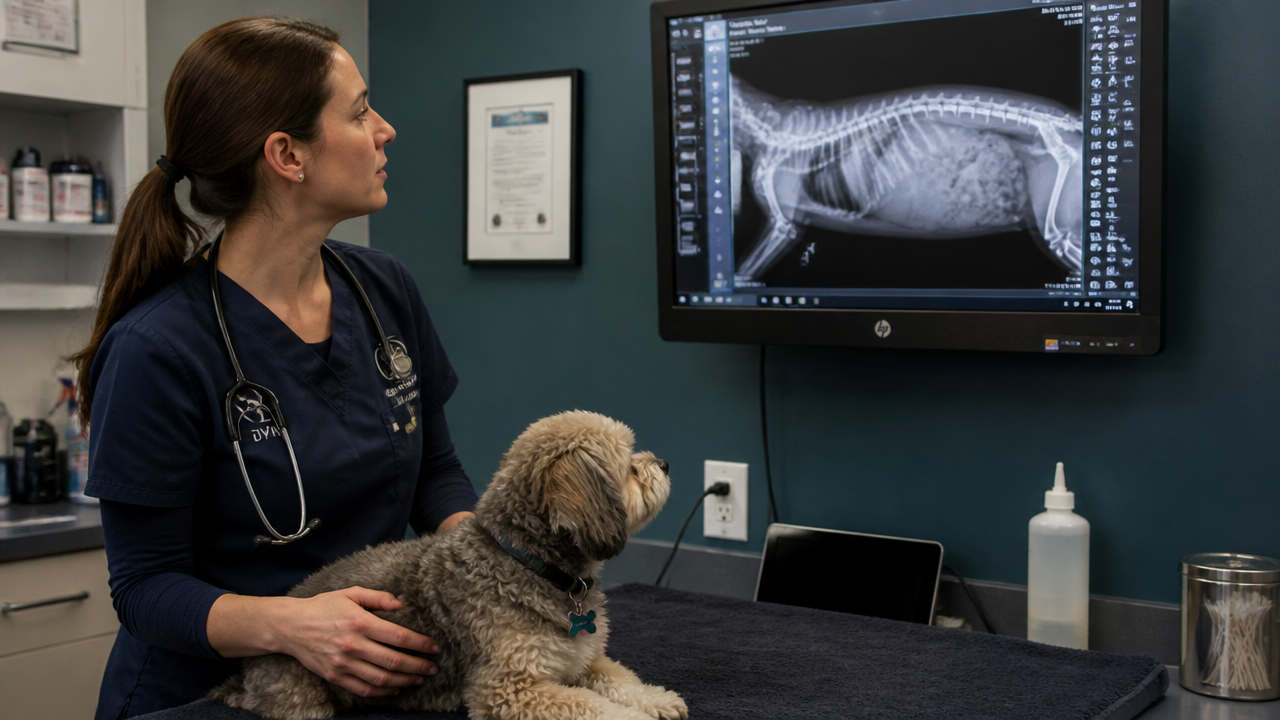
If you've heard a radiologist or ER vet use the phrase "wet read" and wondered where it came from, the answer is more literal than you'd guess.
Where the Term Actually Comes From
Before digital imaging, film had to be developed. A radiograph came out of the processor wet, and if a clinical team needed an answer before it had even dried, a radiologist would look at it right there and give a fast, informal read on the spot. That became known as a wet read. It didn't replace the final report. It just got the team an answer while everything else caught up.
Wet film disappeared decades ago. The name stuck around because the problem it solved never went away. There are still moments when a team can't wait for a full report. They need an answer now, while the patient is still on the table.
Why the Term Is Showing Up in Veterinary Teleradiology
Teleradiology already solved a lot: access to board-certified radiologists without hiring one in-house, coverage around the clock, dependable STAT turnaround. What it didn't automatically fix was the in-the-room moment, when a vet is standing over a patient and needs an answer before the next step, not in an hour, right now.
That's the gap Wet Read is built for. On the RadsForVets platform, a vet submitting a case picks the priority that matches the moment: Standard for non-urgent cases, STAT for urgent cases that need a fast answer but aren't in the room waiting on it, and Wet Read for when the vet is at the table and can't move forward without an answer.
It's an old, real term put to a real, current use. Nobody made it up to sound fast.
What Wet Read Actually Means on RadsForVets
Choosing Wet Read sends your case to a board-certified veterinary radiologist as the top priority, read while your team is still deciding what happens next. No automated flag, no AI summary. A radiologist reads it. Speed and expertise aren't a tradeoff here.
RadsForVets publishes firm turnaround commitments for Standard and STAT cases: 1-hour STAT for X-ray and Fluoroscopy, 4-hour STAT for CT, Ultrasound, and MRI. Wet Read is the fastest option on the platform, for the moments even STAT isn't fast enough.
Why This Matters for Your Practice
If your team has ever had a patient on the table with no good option between "wait for the queue" and "call around and hope someone's free," this is the gap Wet Read fills. It's a third choice, not just two speeds, for the cases where the timeline is the whole decision.
Frequently asked questions
Common questions
Where does the term “wet read” come from?
Film radiology. A radiograph came out of the processor still physically wet, and a radiologist gave an immediate, informal read on the spot before it was dried, filed, or formally reported.
Is “wet read” a real clinical term, or a marketing name?
Real, and long-established. Its use in teleradiology means the same thing it always has: the fastest possible interpretation, given while the clinical team is still standing there waiting on it.
What's the difference between Standard, STAT, and Wet Read?
Standard is for non-urgent cases read within the normal turnaround window. STAT is for urgent cases that need speed but aren't in the room waiting. Wet Read is the fastest priority, for when the vet is at the table and needs an answer before the next step.
Is a Wet Read read by an actual radiologist?
Yes. Every priority level, Wet Read included, goes to a board-certified veterinary radiologist. Speed doesn't come at the cost of who's doing the interpreting.
How do I choose Wet Read when submitting a case?
Select it as the priority at the point of submission on the RadsForVets platform, the same way you'd choose Standard or STAT.
Related reading
Work with us
Board-certified reads, 1 hour STAT X-ray, every day of the year
No contracts, no minimums, and direct access to the radiologist reading your case.