
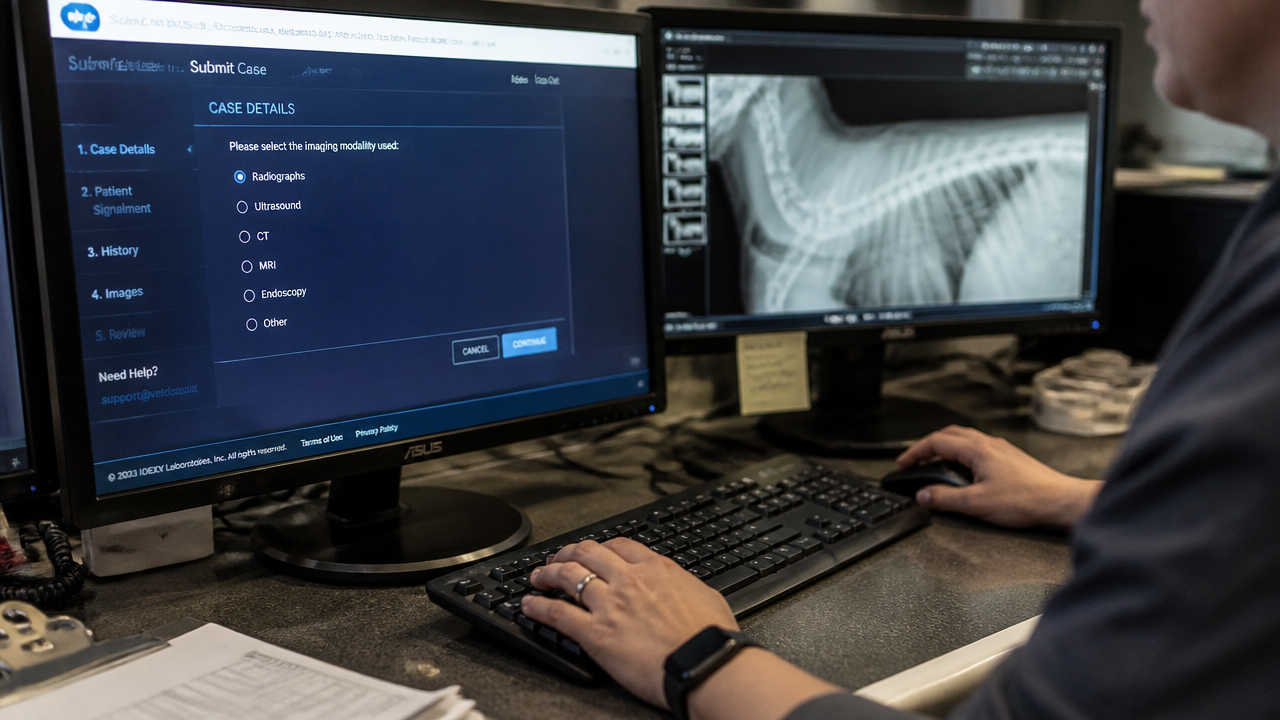
Every case submitted for veterinary teleradiology gets a priority level. Picking the right one, every time, is a small habit that has a real effect on how useful the read is when it comes back. Here's how to think about it.
Start With One Question: What's Happening While You Wait?
The fastest way to pick the right priority is to ask what your team is actually doing while the case is out for a read. Continuing with a scheduled day, no urgency? That's Standard. Need it back fast, but moving on to other things in the meantime? That's STAT. Patient's on the table and nobody's doing anything else until you hear back? That's Wet Read.
Standard: For Non-Urgent Cases
Standard fits routine imaging with no immediate decision riding on the result: a wellness screening finding, a follow-up study, a stable patient with time on the clock. These get read within the normal turnaround window, reliably and thoroughly.
STAT: For Urgent Cases That Aren't in the Room Waiting
STAT is for cases that genuinely need speed, but where your team isn't standing still for it. A patient who needs monitoring, imaging that'll inform tomorrow's treatment plan, a case the referring vet wants back before end of shift but isn't an active emergency, all fit STAT. RadsForVets' published commitments are 1 hour for X-ray and Fluoroscopy and 4 hours for CT, Ultrasound, and MRI, whether it's 3 AM or 3 PM.
Wet Read: For the Moment You Can't Move Forward Without It
Wet Read fits when your team's next move depends entirely on the result and nothing happens until you have it. The vet at the table with the owner waiting, deciding between surgery and monitoring. An ER team triaging trauma before the rest of the workup starts. It's the fastest option on the platform, and it still goes to a board-certified radiologist, not an automated flag.
Training Your Team on This in Five Minutes
Nobody needs to memorize a policy manual. One question does most of the work: "Are we doing anything else until this comes back?" If yes, it's Standard or STAT depending on urgency. If no, and the team's standing by specifically for this result, it's Wet Read.
Why the Choice Matters
Picking the right priority every time keeps your fastest option reserved for the moments that actually need it, so the whole system does what it's supposed to: reliable for routine cases, fast for urgent ones, immediate for the ones that can't wait at all.
Frequently asked questions
Common questions
How do I know whether a case should be Standard, STAT, or Wet Read?
Ask what your team is doing while the case is out for a read. Continuing normally means Standard. Needing speed but not standing still means STAT. Not moving forward until you hear back means Wet Read.
Is Wet Read only for emergency cases?
It's built for moments where your team's next move depends entirely on the result, which shows up most often in emergency and urgent-care settings, but the deciding factor is the situation, not the case type alone.
Does choosing a higher priority mean a less thorough read?
No. Every priority level, Wet Read included, goes to a board-certified veterinary radiologist. The full report still follows.
Should front-desk or clinical staff choose the priority level?
Whoever understands the clinical urgency should make the call, usually the submitting veterinarian or a technician working directly with them.
What if my team picks the wrong priority for a case?
Contact RadsForVets directly if a case needs to be escalated after submission. Building the “what are we doing while we wait” habit internally is the best way to get it right the first time.
Related reading
Work with us
Board-certified reads, 1 hour STAT X-ray, every day of the year
No contracts, no minimums, and direct access to the radiologist reading your case.