
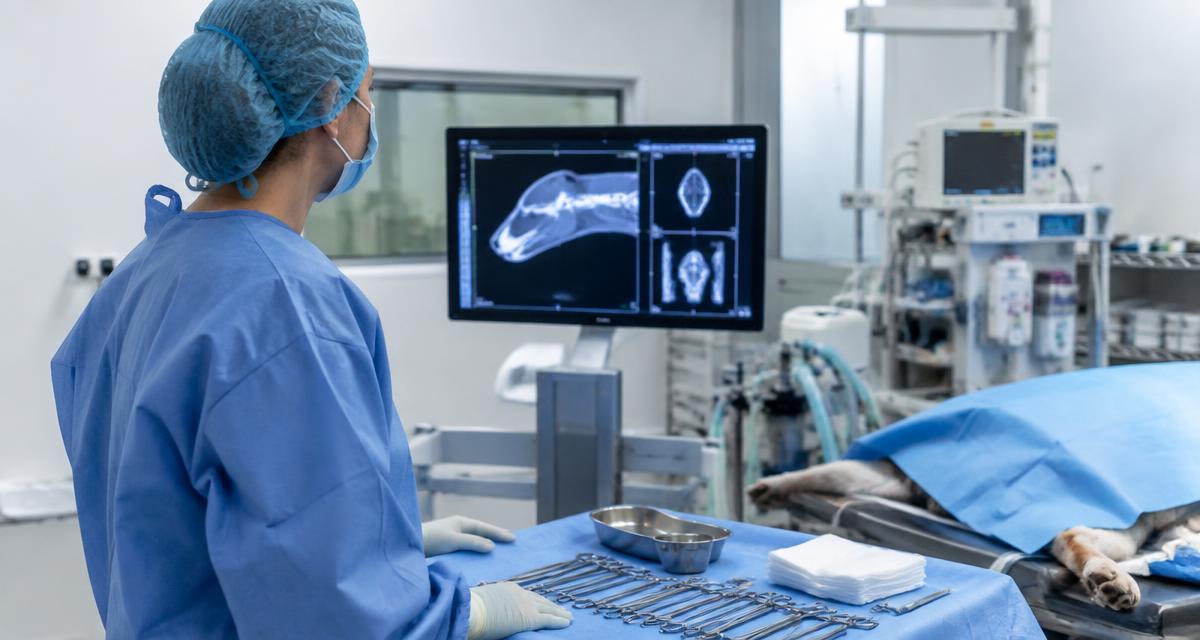
Before a procedure, imaging stops being descriptive and becomes operational. The surgeon is not asking what the study shows in general. They are asking one or two questions that decide whether, when and how to proceed.
That framing changes what a good answer looks like. A general description of the study may be accurate and still leave the surgeon where they started. The useful answer names the branch: proceed, change the approach, or stand down. A Wet Read is built around questions of exactly that shape.
Why the Pre-Surgical Moment Is Different
The patient may already be anesthetized. The team is assembled. Nothing else is happening until the imaging question is answered. That is exactly the situation a Wet Read exists for: targeted, indication-specific questions addressed directly by the radiologist, with the comprehensive final report following before shift's end.
The economics of the moment reinforce it. Anesthetized time, reserved theater space and a team standing ready are all spent waiting, so the read that arrives while the patient is prepped protects all three. The same read arriving an hour later protects none of them.
Framing the Question
- Is there evidence of perforation or free gas?
- Is the mass confined to one lobe, and are the margins approachable?
- Is there thoracic metastatic disease that changes whether to proceed?
- Which limb, which side, which level?
Vague submissions produce thorough reports that still miss the point. A named question gets a named answer.
The questions belong in the submission itself, not in a phone call afterward. Written into the clinical history, they travel with the study to the radiologist, and the answer comes back against each one in turn. Real-Time Chat on the case then covers whatever the answers raise.
Studies That Carry Surgical Decisions
CT carries most of the pre-surgical load, with Ultrasound and X-ray close behind. Whatever the modality, the read comes from a board-certified veterinary radiologist.
Questions That Decide the Approach
Three examples show the range. A mass with ambiguous margins: is it resectable, and what structure does it involve? A trauma patient before fixation: is there unrecognized axial injury that changes the order of repair? An oncology case before surgery: is there thoracic metastatic disease that makes the procedure moot? Each is a single decisive question a board-certified radiologist can answer from the study.
After the Wet Read
The answer arrives, the team moves, and the comprehensive report lands in the record afterwards, injecting into the matching radiology order in ezyVet and Instinct. If the plan raises a new question mid-procedure, Real-Time Chat on the case reaches the radiologist in seconds.
The record is the other beneficiary. The comprehensive report that follows documents the reasoning behind the surgical decision, which matters if the case is referred, revisited, or reviewed. Injection into the matching radiology order in ezyVet and Instinct places it beside the rest of the patient's record without anyone re-filing it.
Frequently asked questions
Common questions
Why use a Wet Read before surgery?
Because the decision to open, and the approach taken, often rests entirely on what the imaging shows. A Wet Read answers targeted questions while the team waits.
What should be asked in the submission?
Specific, indication-driven questions. Is there free gas, is the lesion resectable, is there metastatic disease, is the opposite limb affected.
Does a comprehensive report still come?
Yes. The same radiologist provides the comprehensive final report before shift's end.
Which studies suit this best?
Any study that answers a surgical question, most often CT, Ultrasound and X-ray.
Can the surgeon speak with the radiologist?
Real-Time Chat sits on the case, so a surgical question reaches the radiologist in seconds.
Is Wet Read appropriate for planned procedures?
It fits best when the team is standing by for the answer. Scheduled planning with time in hand is usually a STAT or Standard submission.
How many questions should a surgical Wet Read include?
The two or three that actually gate the procedure. Focused questions get direct answers at the speed the operating schedule needs.
What if the imaging changes the surgical plan?
The answer and the comprehensive report document why, giving the record a clear line from the imaging to the decision.
Do we need special equipment to submit?
No. Studies are submitted as standard DICOM from your existing equipment and PACS.
Related reading
Work with us
Board-certified reads, 1 hour STAT X-ray, every day of the year
No contracts, no minimums, and direct access to the radiologist reading your case.