Quick Summary
An emergency hospital should choose a veterinary teleradiology provider on ten criteria that reflect how a case moves at the table: who reads it, how urgency is set, how fast the answer returns, and how the radiologist can be reached mid-case. Score every criterion for every provider, including what happens at 3 AM on a Sunday.
- Every case is read by an ACVR or ECVDI board-certified diplomate, STAT or not.
- Three priorities are available per case: Standard, STAT and Wet Read.
- Turnaround is written by modality: 1 hour for STAT X-ray and Fluoroscopy, 4 hours for STAT CT, MR and Ultrasound.
- Real-Time Chat reaches the radiologist in seconds, and the impression sits at the top of the report.
- Equipment fit and overnight performance decide whether the arrangement holds up after the first month.
Why An Emergency Hospital Evaluates Differently
An emergency hospital does not buy veterinary teleradiology the way a scheduled practice does. Cases arrive in clusters, decisions wait on the images, and the doctor who submitted the study is usually managing the next patient by the time the report returns.
That changes what matters. A feature grid on a website says little about whether a radiologist can be reached while a dog is on the table. The ten criteria below are built around the moments that decide how a shift goes.
How To Use This List
Score each criterion for every provider you consider, and ask for the answer in writing. Then ask the same question again about a Sunday at 3 AM. A broader side-by-side method is in our post on comparing veterinary teleradiology companies.
Criteria 1 To 3: Who Reads, How Urgency Is Set, And How Fast
1. Who Reads Every Case
Board certification by the American College of Veterinary Radiology (ACVR) or the European College of Veterinary Diagnostic Imaging (ECVDI) should apply to every case, not only the cases flagged urgent [1]. In an emergency hospital the study that looks routine at submission is often the one that changes by hour two.
Ask whether the same standard holds across X-ray, Ultrasound, CT, MR and Fluoroscopy, and for overnight reads. At RadsForVets every case is read by an ACVR or ECVDI board-certified diplomate from a global team of board-certified radiologists across time zones.
2. Priorities That Match Clinical Urgency
A two-option system, urgent and routine, forces hospitals to misuse one of the two. Look for a structure that lets the submitting doctor match the priority to the decision waiting on the images. RadsForVets offers three: Standard, STAT and Wet Read, selected case by case.
3. Turnaround Stated By Modality
Turnaround commitments should be written as numbers, by modality, and should hold at night. At RadsForVets, STAT is 1 hour for X-ray and Fluoroscopy and 4 hours for CT, MR and Ultrasound, and Standard is 24 hours. The details are on the 24/7 STAT radiology reads page.
| Criterion | Question To Ask | A Strong Answer Includes |
|---|---|---|
| Who reads | Who reads STAT and overnight cases? | An ACVR or ECVDI board-certified diplomate on every case |
| Priorities | How does the submitting doctor set urgency? | Standard, STAT and Wet Read, chosen per case |
| Turnaround | What are the numbers by modality, at night? | 1 hour STAT X-ray and Fluoroscopy, 4 hours STAT CT, MR and Ultrasound |
Talk To A Radiologist
See how RadsForVets reads for your emergency hospital
All modalities, all priorities, every day of the year. No contract and no minimums.
Criteria 4 To 6: Wet Read, Live Communication And Report Structure
4. A Wet Read Option That Is Defined, Not Implied
Ask any provider how it defines a rapid read, what the clinic sends with the request, and who writes the final report. RadsForVets defines it this way:
Wet Read Definition
A wet-read is one where the clinic submits targeted, indication-specific questions which are specifically addressed by the radiologist. The clinic can request that the radiologist either make a call, or send a 'wet-read' report. The same radiologist will provide the comprehensive final report before shift's end.
Hospitals managing multiple patients at once lean on this path most. Our posts on wet reads in emergency practice and the wet read at RadsForVets cover how to frame the question.
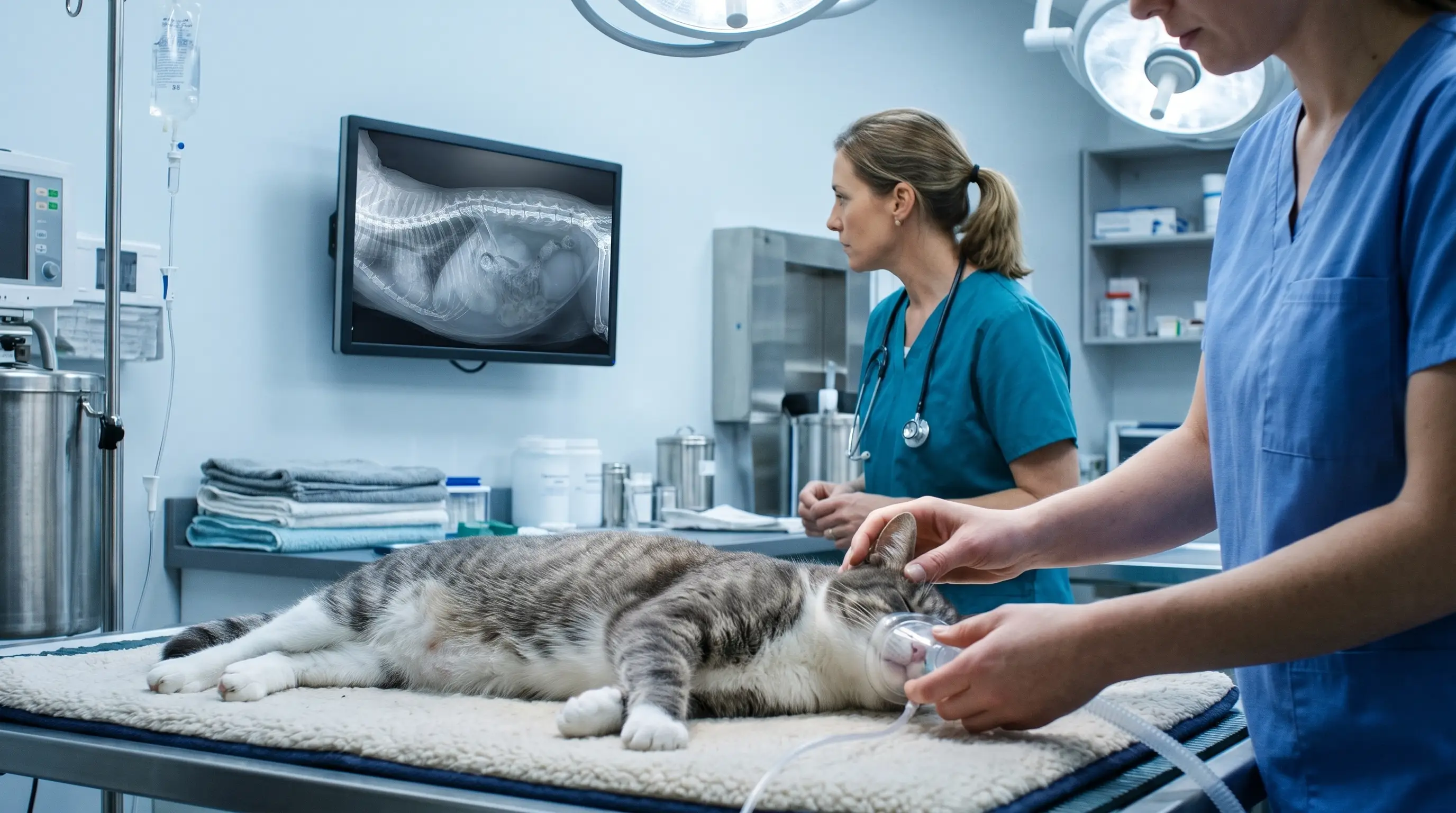
5. Real-Time Chat Instead Of A Phone Queue
A question during a case should reach the radiologist without a hold. RadsForVets Real-Time Chat has three tabs: Clinic and Radiologist, Clinic and Operations Team, and Radiologists and Operations Team. Questions reach the radiologist in seconds, and history changes go to the Operations Team through the same channel.
Test this directly. Send a question on a live case and measure the time to a clinical answer, not the time to an acknowledgment. More on the workflow is in real-time chat with your radiologist.
6. The Impression At The Top
Read a sample report the way you would at the table. Prioritized diagnoses and recommendations should sit at the top, like a journal abstract, so the next action is clear in seconds. The findings below support the decision rather than hide it. See impression-on-top reporting for the format.
Criteria 7 To 10: Walkthroughs, Coverage Range, Integration And Overnight Reliability
7. Video Walkthroughs From The Radiologist
Many RadsForVets reports include a short video of the radiologist reviewing the images. For a hospital team, the walkthrough shortens discussion at rounds and gives the clinician a second way to confirm what the report says. Ask any provider whether video is offered and how often it is included. Our post on video in the veterinary radiology report shows how teams use it.
8. Modalities And Species Under One Provider
An emergency shift produces X-ray, Ultrasound and CT cases in one night, often for the same patient. One provider across X-ray, Ultrasound, CT, MR and Fluoroscopy avoids splitting a shift between two workflows. RadsForVets reads dogs and cats, and exotic patients on a 24-hour best-effort basis.
9. Fit With Your Equipment And Practice Management System
Ask how studies leave your equipment, whether your PACS or modality connects directly, and where the report lands. RadsForVets reports inject into the matching radiology order in ezyVet and Instinct, and more systems are being added. The integrations page lists current options.
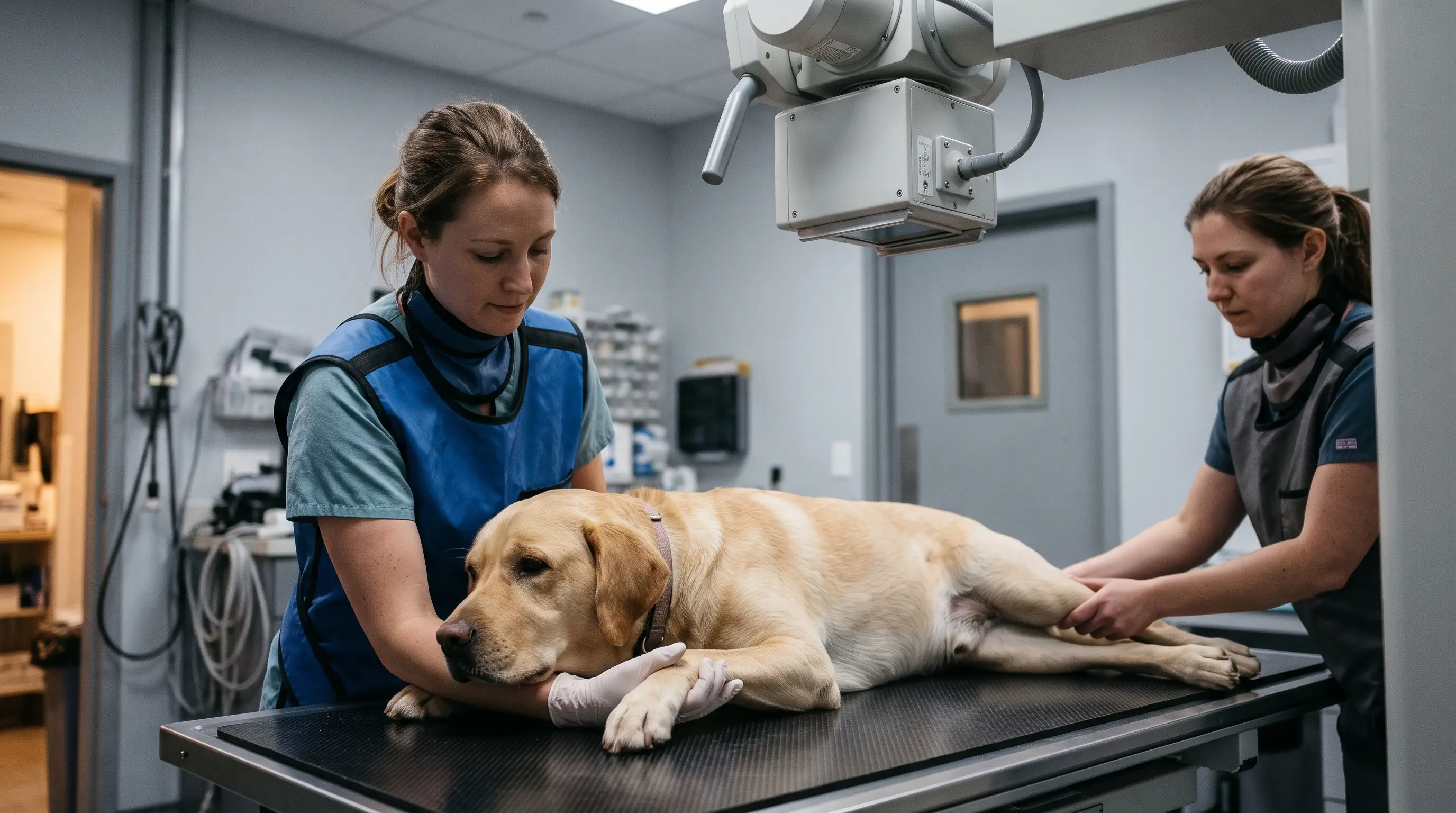
10. The Same Performance At 3 AM On A Sunday
It's the same on Sunday at 3 AM as it is on Wednesday at 3 PM. That is the standard to request in writing: the same readers, priorities and turnaround on nights, weekends and holidays. Also confirm the commercial structure. RadsForVets has no contract and no minimums, with payment per case and pricing on request.
For the staffing side of this question, read teleradiology coverage for nights, weekends and holidays, and see the urgent care page for how the service fits an emergency or urgent care workflow.
Talk To A Radiologist
See how RadsForVets reads for your emergency hospital
All modalities, all priorities, every day of the year. No contract and no minimums.
A Scoring Sheet For Your Medical Director
Give each criterion a score from 0 to 2 for every provider under review. Have the medical director, the emergency lead, the lead technician and the practice manager score independently, then compare. Differences between scorers usually point to the question that needs a written answer.
What Peer Hospitals Report
Two clients describe the first and third criteria in their own words.
"Darien Animal Clinic has required board-certified radiology review for all radiographs since 2012."
Steve Morris, CVPM CVBL, Hospital Administrator, Darien Animal Clinic
"the turnaround time is fantastic and the readings accurate and professional"
Brook A. Niemiec, DVM, Chief of Staff, Diplomate AVDC and EVDC, Fellow AVD
Putting The Ten Criteria To Work In A Trial
A short trial shows more than any written answer. Submit real cases in the first week and score what comes back.
- Submit one STAT case and one Wet Read case and note the time to a usable answer for each.
- Ask a clinical question through the chat during a live case.
- Read the report at the table and note how fast the action is clear.
- Confirm the report lands in the matching order in your practice management system.
- Repeat one submission overnight or on a weekend.
If the overnight result matches the weekday result, criteria 1 to 10 are likely to hold up after the trial ends. If it does not, the gap is worth raising before the arrangement is settled.
References
- [1]American College of Veterinary Radiology. About the College and diplomate certification. https://www.acvr.org/
- [2]American College of Veterinary Emergency and Critical Care. Emergency and critical care resources. https://www.acvecc.org/
- [3]American Animal Hospital Association. Accreditation and practice standards. https://www.aaha.org/
- [4]American Veterinary Medical Association. Veterinary telehealth guidance. https://www.avma.org/
Related Reading
Talk To A Radiologist
See how RadsForVets reads for your emergency hospital
All modalities, all priorities, every day of the year. No contract and no minimums.
Frequently asked questions
What Should An Emergency Hospital Ask A Teleradiology Provider First?
Ask who reads the case. Every study, including overnight and STAT cases, should be read by an ACVR or ECVDI board-certified diplomate. Then ask how the submitting doctor sets urgency and what the written turnaround is by modality.
How Fast Should Emergency Veterinary Teleradiology Reports Be?
The commitment should be written by modality and hold at night. RadsForVets returns STAT X-ray and Fluoroscopy reports in 1 hour and STAT CT, MR and Ultrasound reports in 4 hours. Standard reads return in 24 hours.
When Does A Wet Read Fit Better Than STAT?
A Wet Read fits when one clinical decision is waiting on the images and the question can be stated precisely. The radiologist answers by call or wet-read report, and the same radiologist provides the comprehensive final report before shift's end. STAT suits a case that needs the full report quickly.
Does Teleradiology Fit Into ezyVet And Instinct Workflows?
Reports inject into the matching radiology order in ezyVet and Instinct, and more systems are being added. Reports are also always available on the RADical platform.
Can One Provider Cover Dogs, Cats And Exotics?
RadsForVets reads dogs and cats across X-ray, Ultrasound, CT, MR and Fluoroscopy. Exotic patients are covered on a 24-hour best-effort basis.
