
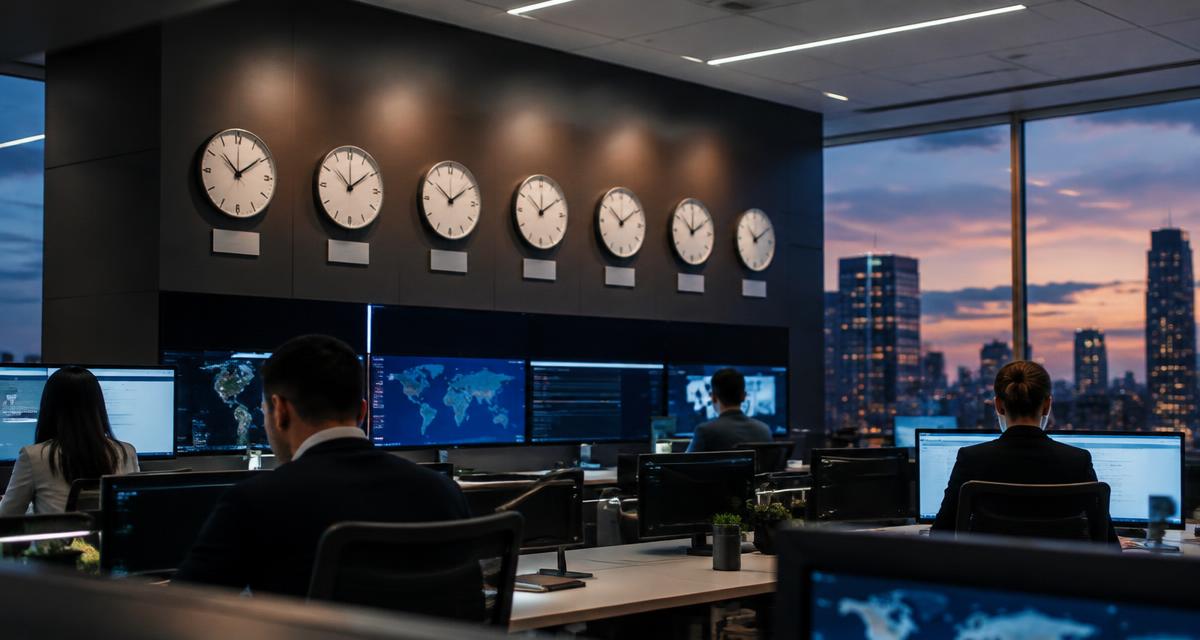
Continuous coverage is easy to claim and difficult to build. The difference shows up at the hours when a single-region team is asleep.
The difficulty is arithmetic, not effort. A day contains three overnight windows somewhere, and a coverage model has to hold through all of them, every day, without a dip at the boundaries between shifts. That is a staffing design problem before it is a radiology problem.
The Staffing Model
RadsForVets works with approximately 30 board-certified radiologists spread globally. Hours that fall in the middle of the night in one place are ordinary working hours somewhere else, which is what makes a genuinely continuous shift pattern possible.
The spread matters as much as the number. Radiologists working from different regions cover the clock the way a relay covers a circuit: the baton is always held, and no individual carries the unsociable hours indefinitely. That sustainability is what keeps the standard identical at every hour rather than stretched at some of them.
One Standard, Every Hour
- Every case read by an ACVR- or ECVDI-certified radiologist.
- STAT X-ray and Fluoroscopy within 1 hour.
- STAT CT, Ultrasound and MR within 4 hours.
- Standard within 24 hours.
- Wet Read as the fastest option, read while you wait.
It's the same on Sunday at 3 AM as it is on Wednesday at 3 PM.
A promise like that is only useful if it survives contact with a real night, which is why the commitments are stated by modality and priority rather than as a general aspiration. A team holding an overnight case can know which clock applies before the study leaves the building.
The Operations Team
Behind the radiologists sits the Operations Team, which handles submissions, escalations and anything that is not a clinical question. They have their own conversation on every case in Real-Time Chat. We're always here.
Their scope is wider than troubleshooting. Configuration during onboarding, escalation of a case whose urgency has changed, and the coordination between clinics and radiologists all run through the Operations Team, which is why they sit on every case rather than behind a general support address.
What It Means for a Clinic
Practically, it means the overnight team does not have to plan around a service that becomes slower after dark. The same priorities are available, with the same commitments behind them.
It also means the practice's own staffing can be designed without radiology hours in mind. Overnight shifts can be leaner, and the specialist input arrives when it is needed rather than when a local radiologist's day begins.
Frequently asked questions
Common questions
How is round-the-clock coverage staffed?
With approximately 30 board-certified radiologists spread globally, so overnight hours in one region are working hours in another.
Is the overnight standard different?
No. Every case, at every hour, is read by an ACVR- or ECVDI-certified radiologist.
Who supports the clinic outside clinical questions?
The Operations Team, reachable on every case through Real-Time Chat.
Do turnaround commitments change overnight?
No. STAT X-ray and Fluoroscopy within 1 hour, STAT CT, Ultrasound and MR within 4 hours, Standard within 24 hours.
What happens on public holidays?
Coverage runs 24/7/365, holidays included.
Can a clinic reach the radiologist who read a case?
Yes, through the Clinic and Radiologist conversation on that case.
Does a globally spread team mean reads happen at unusual hours locally?
It means a board-certified radiologist is awake and on shift at every hour. The clinic submits whenever the case arrives and the commitments hold.
How does a clinic reach the Operations Team overnight?
Through the Clinic and Ops Team conversation on the case in Real-Time Chat, which is monitored around the clock.
Related reading
Work with us
Board-certified reads, 1 hour STAT X-ray, every day of the year
No contracts, no minimums, and direct access to the radiologist reading your case.