Quick Summary
A Wet Read works when the question names the decision that is waiting on the images. For hemoabdomen, GDV and spinal emergencies, a short modality-specific question set lets the radiologist commit to an answer while the patient is still on the table.
- State the decision first, then the finding you already know, then the question.
- Hemoabdomen: ask about free fluid, a likely source and findings that change the surgical plan.
- GDV: radiographs usually lead, so ask about gastric position, free gas and thoracic findings that affect anesthesia.
- Spinal: ask for level, canal compromise and laterality, with CT for bone and mineralized material and MR for the cord.
- Choose STAT instead when the full report is needed quickly.
Why The Question Decides The Value Of A Wet Read
RadsForVets defines the Wet Read this way:
Wet Read Definition
A wet-read is one where the clinic submits targeted, indication-specific questions which are specifically addressed by the radiologist. The clinic can request that the radiologist either make a call, or send a 'wet-read' report. The same radiologist will provide the comprehensive final report before shift's end.
Everything depends on the words "targeted" and "indication-specific". A question that names the decision gets a direct answer. Our posts on framing a wet read question around the clinical decision and wet reads in emergency practice cover the principle. This post applies it to three emergencies.
Hemoabdomen: Ultrasound And CT Questions
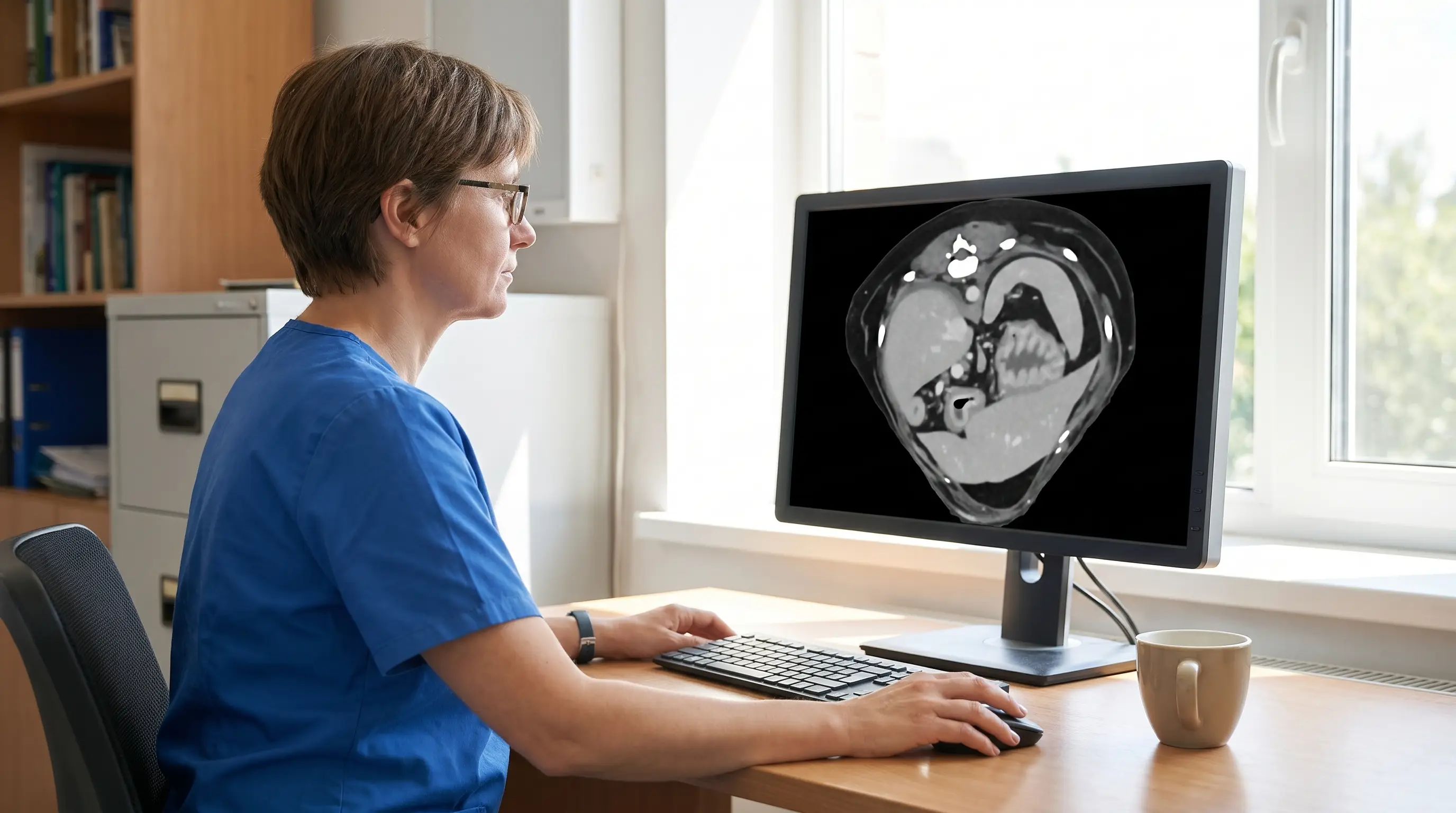
The decision is usually whether and how to proceed to surgery. Ultrasound answers the first questions on the table. Review the wider picture on our Ultrasound modality page.
Ultrasound Questions
- Is free abdominal fluid present, and what is its distribution?
- Is a splenic or hepatic mass present that could be the source?
- Are there findings in other organs that point to a different source?
- Are there findings that change the surgical plan, such as multiple masses or nodular change in the liver?
When CT Adds Information
Once the patient is stable, CT can show the extent of disease and evaluate the thorax in the same session. Questions that suit CT are the extent of the primary mass, involvement of adjacent structures, and whether the thoracic images show nodules that affect the conversation about treatment.
Talk To A Radiologist
See how RadsForVets reads for your emergency hospital
All modalities, all priorities, every day of the year. No contract and no minimums.
GDV: Where X-Ray Leads
Gastric dilatation and volvulus is usually a radiographic call, so the Wet Read question belongs with X-ray, not Ultrasound or CT. The decision is whether to proceed to decompression and surgery now. Send a right lateral abdominal image and state what you have already done.
- Is there a pattern of gastric malposition, such as compartmentalization of the stomach?
- Is free peritoneal gas present?
- Is the position of the spleen abnormal?
- Do the thoracic images show findings, such as aspiration, that change anesthetic planning?
Spinal Emergencies: CT And MR Questions
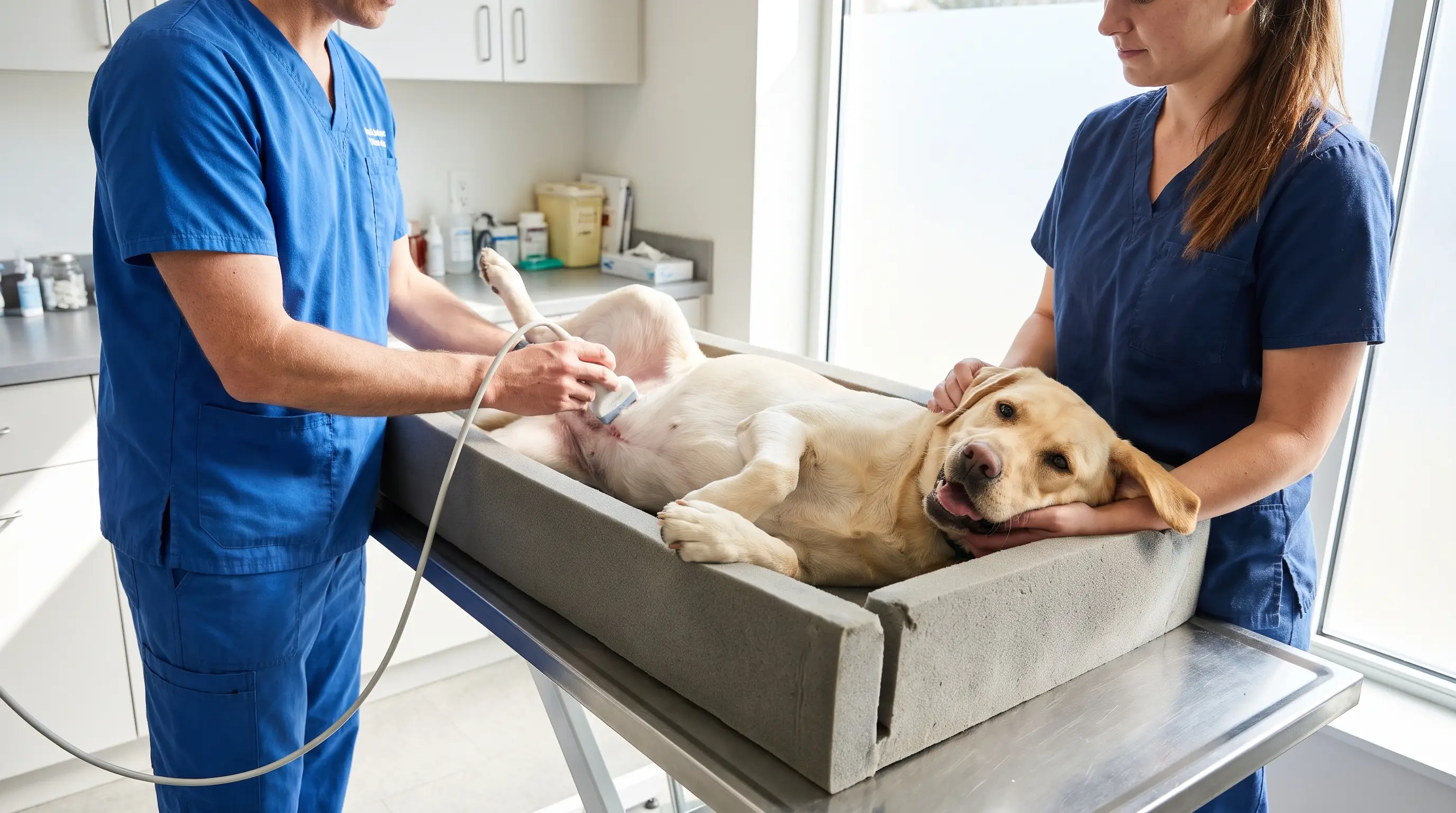
The decision is whether the patient needs decompressive or stabilizing surgery and by which approach. CT and MR answer different parts of that question, so name the one you need.
CT Questions
- Is there a vertebral fracture or luxation, and at which level?
- Is the vertebral canal compromised?
- Is mineralized extruded disc material present, and at which level and laterality?
MR Questions
- Is there spinal cord compression, and from which direction?
- Is there extradural material, and at which level and laterality?
- Are there signal changes within the cord?
"RadsForVets has transformed our urgent care practices with clear, precise interpretations that empower quick, confident decisions."
Victoria Kidder, DVM, Co-Founder, OnPoint Veterinary Urgent Care
Choosing Between Wet Read And STAT
Both are read by an ACVR or ECVDI board-certified diplomate [1]. Choose a Wet Read when one decision waits on a specific answer. Choose STAT when you need the full report quickly: 1 hour for X-ray and Fluoroscopy, 4 hours for CT, MR and Ultrasound. See Standard, STAT or Wet Read for the full comparison.
References
- [1]American College of Veterinary Radiology. About the College and diplomate certification. https://www.acvr.org/
- [2]American College of Veterinary Emergency and Critical Care. Emergency and critical care resources. https://www.acvecc.org/
Related Reading
Talk To A Radiologist
See how RadsForVets reads for your emergency hospital
All modalities, all priorities, every day of the year. No contract and no minimums.
Frequently asked questions
What Makes A Good Wet Read Question?
It names the decision waiting on the images, states what you already know, and asks one question the images can answer. It also says what each answer changes.
Should I Send A Wet Read Or STAT For A Hemoabdomen?
Use a Wet Read when one decision, such as whether to proceed to surgery, waits on a specific answer. Use STAT when you need the full report quickly. Both are read by a board-certified diplomate.
Can A Wet Read Cover CT And MR?
Yes. The Wet Read is a priority, not a modality limit, so the same targeted-question approach applies to Ultrasound, CT, MR, X-ray and Fluoroscopy.
What Questions Work For A Suspected GDV?
Ask whether a gastric malposition pattern is present, whether free peritoneal gas is visible, whether the position of the spleen is abnormal, and whether thoracic findings affect anesthetic planning.
What Should I Ask For A Suspected Spinal Fracture Or Disc Extrusion?
Ask for the level, whether the canal is compromised, and the laterality of any extradural or mineralized material. CT shows bone and mineralized material well, and MR shows the spinal cord.
