
Quick Summary
When three patients need images at once, order the submissions by what each next intervention is waiting on, not by severity alone. Send the Wet Read for the patient whose decision hinges on one answer, STAT for the patient who needs the full report quickly, and Standard for the stable case.
- Patient care order stays with the clinician; this rule orders the imaging submissions.
- A Wet Read fits one decision waiting on a targeted question.
- STAT fits a full report needed fast: 1 hour for X-ray and Fluoroscopy, 4 hours for CT, MR and Ultrasound.
- Standard fits a stable patient and a routine read, at 24 hours.
- Real-Time Chat keeps the radiologist and the Operations Team current while you move between patients.
Three Patients, One Imaging Window
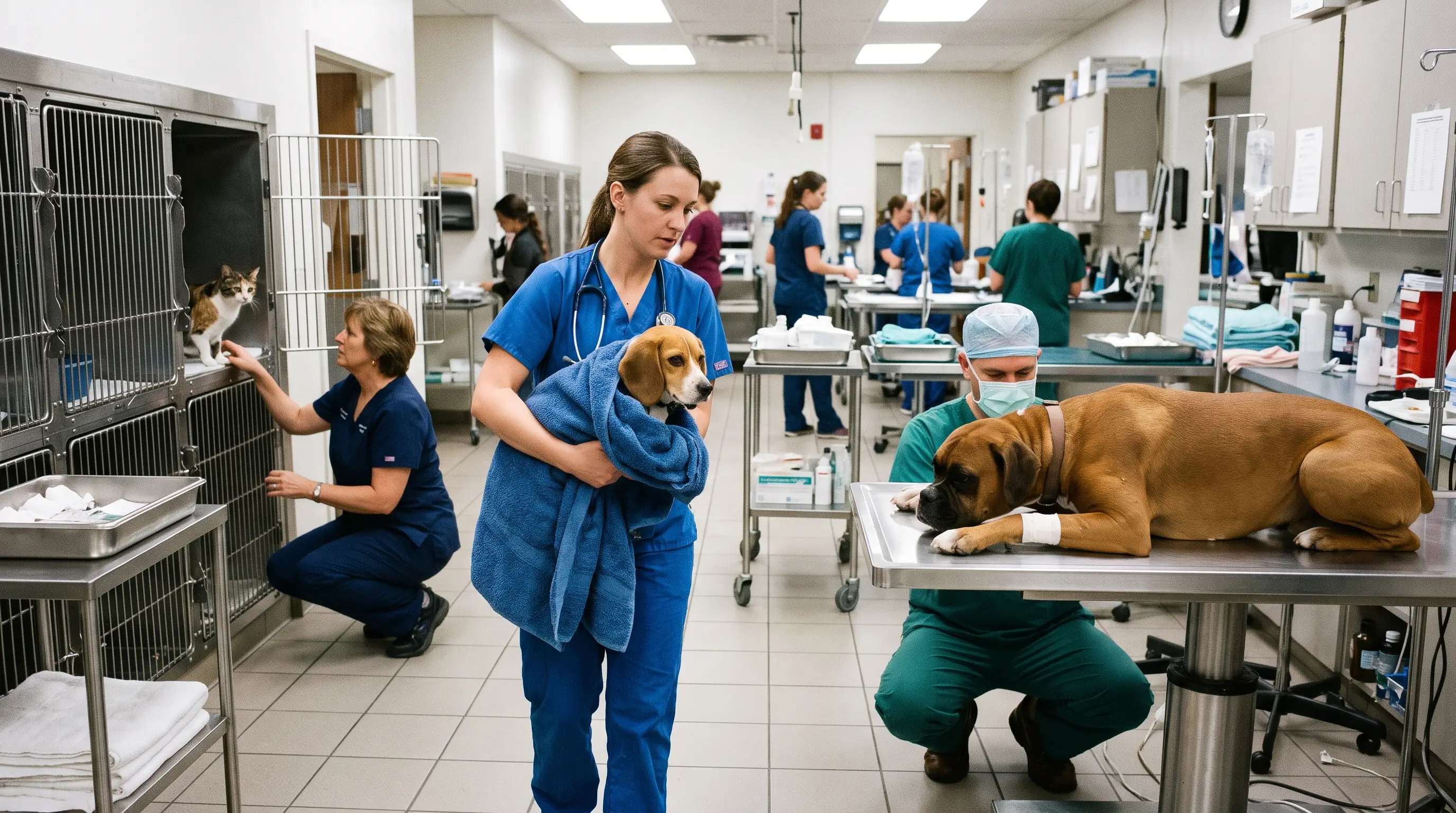
Emergency floors do not deliver one case at a time. A collapsed dog arrives while a dyspneic cat is on oxygen and a vomiting dog waits in room two. All three need images, and the doctor is one person.
The question is how to submit. The wrong order sends the least urgent study first because it was the easiest to position. Our post on veterinary teleradiology during multi-patient emergencies covers surge in general. This post gives a specific ordering rule.
Example Scenario
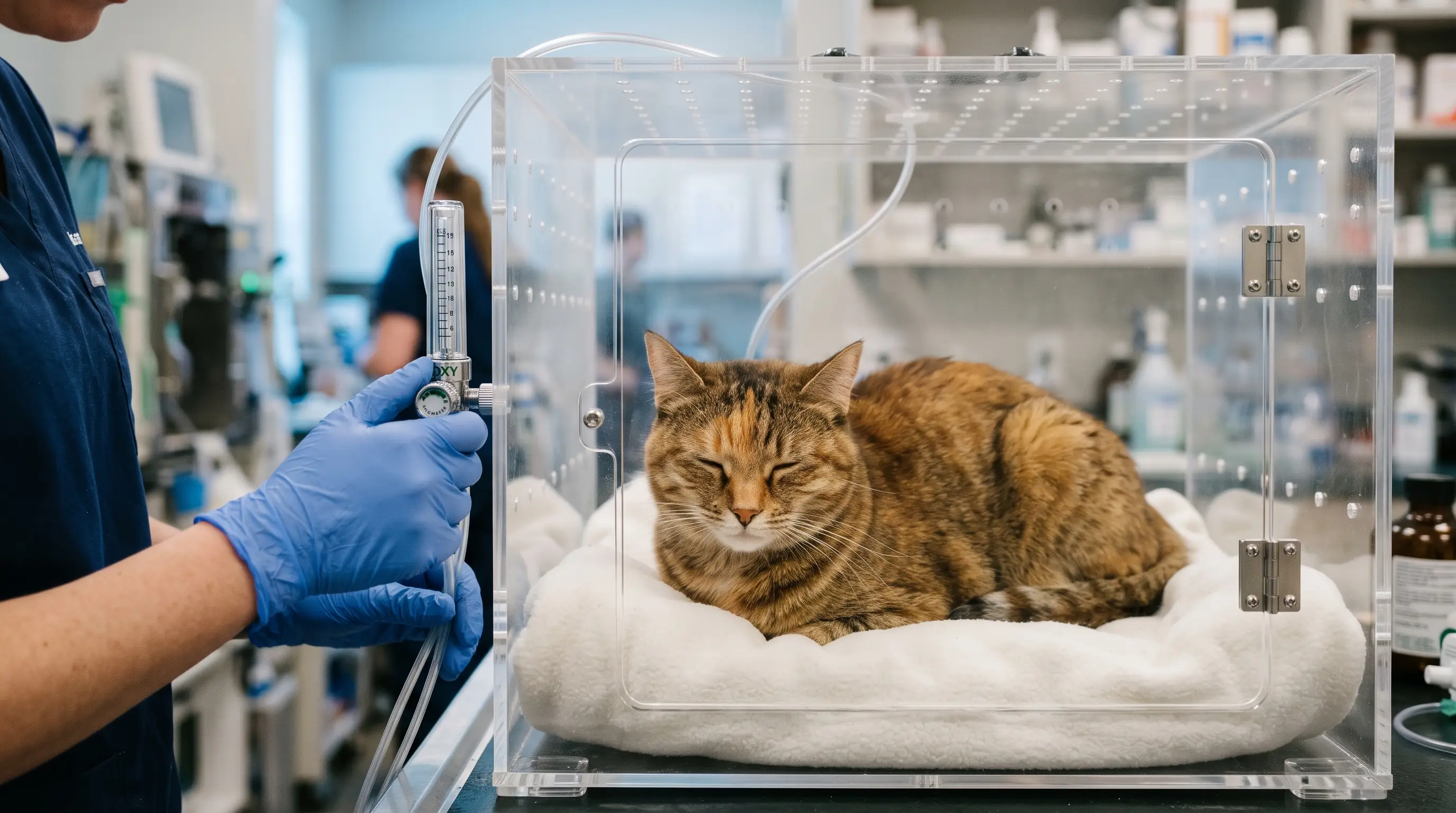
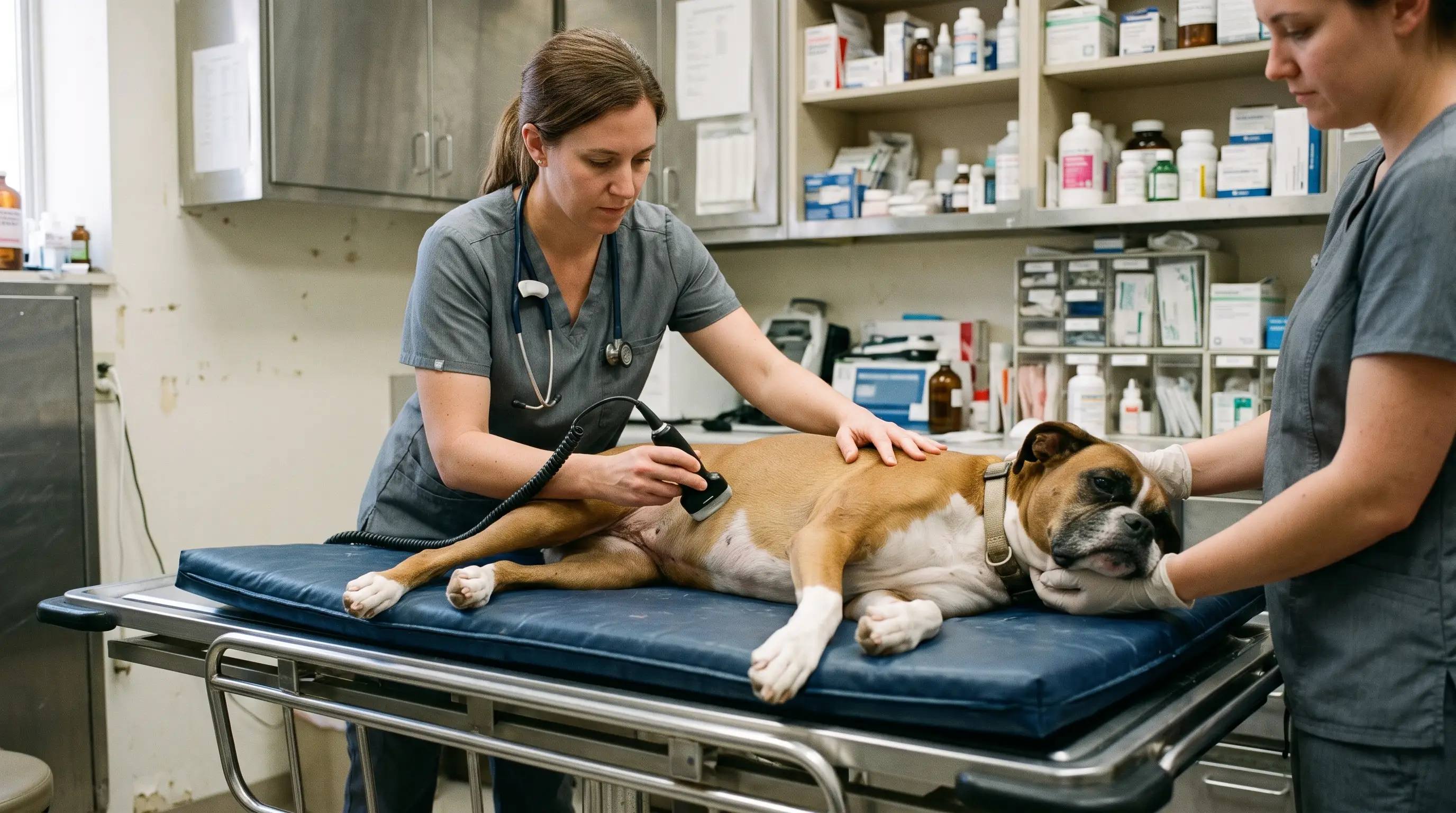
The three patients below are an illustration, not a case record. A collapsed dog with a suspected hemoabdomen, a dyspneic cat stable on oxygen, and a dog vomiting for two days.
The Ordering Rule: Next Intervention, Not Severity Alone
Ask one question for each patient: what is the next intervention, and is it waiting on a single answer from the images? The patient whose answer is "yes" gets the Wet Read first.
- Next intervention waiting on one answer: Wet Read.
- Full report needed quickly, but no single decision pending: STAT.
- Stable patient and routine read: Standard.
Severity still counts, and it is your call. The rule only decides which study the radiologist sees first and how it is labeled. For the full priority comparison, see Standard, STAT or Wet Read.
Talk To A Radiologist
See how RadsForVets reads for your emergency hospital
All modalities, all priorities, every day of the year. No contract and no minimums.
Writing Three Questions In Three Minutes
Speed comes from a fixed format: the decision, what you know, then one question. The example patients show the pattern.
- Collapsed dog: "Deciding on surgery versus transfusion. Is free abdominal fluid present, and is there a likely source?"
- Dyspneic cat: "Stable on oxygen. Is there pleural effusion, a pulmonary pattern, or both?"
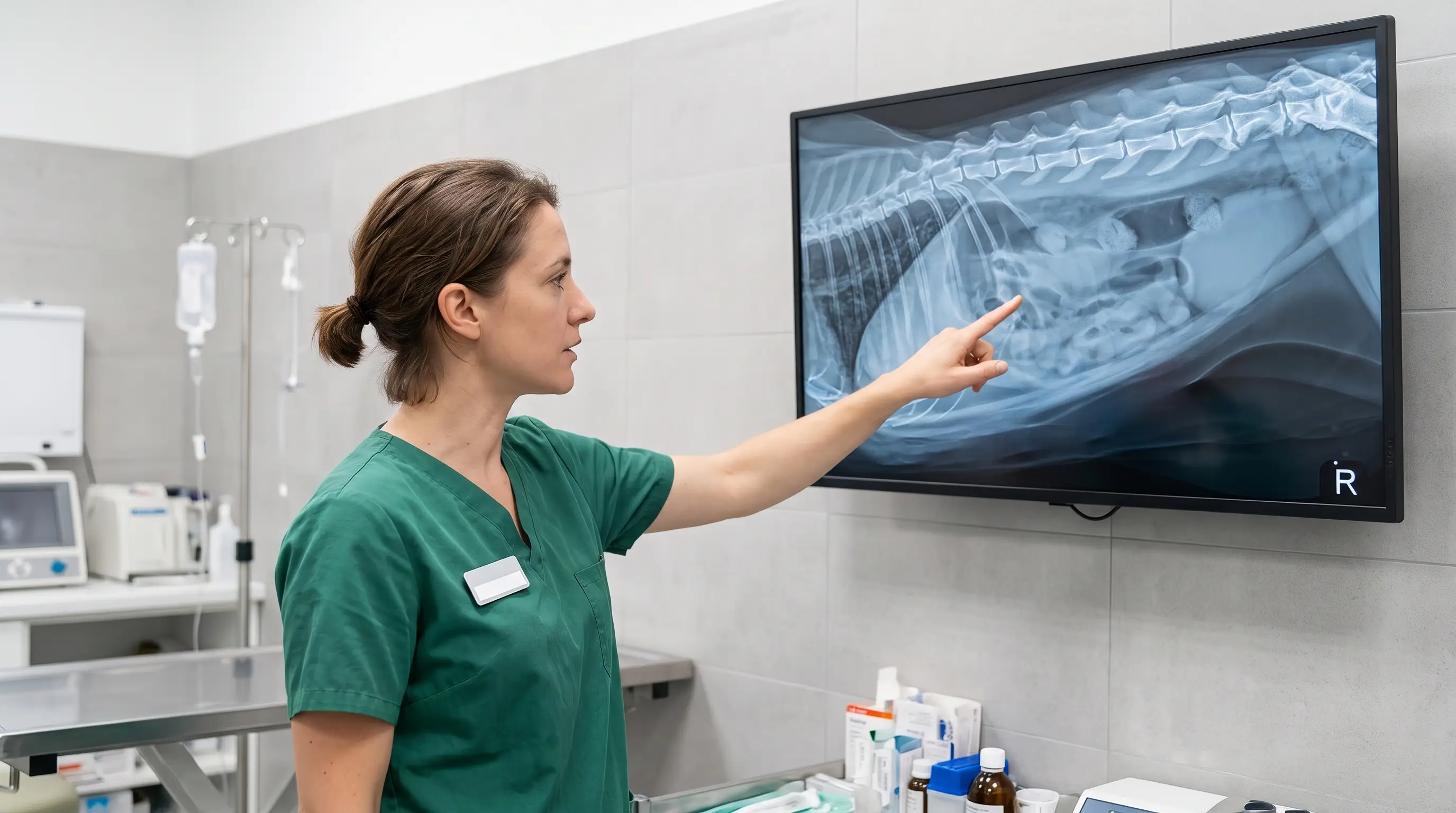
- Vomiting dog: "Two days of vomiting. Is there a gastrointestinal obstruction pattern?"
The format matches the one in framing a wet read question around the clinical decision. Keep each question to one line so it can be written between patients.
Using Real-Time Chat Between Submissions
Once the three studies are in, the case changes. The cat needs thoracocentesis, or the dog's blood pressure drops. Real-Time Chat is where those changes go.
It has three tabs: Clinic and Radiologist, Clinic and Operations Team, and Radiologists and Operations Team. Questions reach the radiologist in seconds, with no hold. History changes go to the Operations Team through the same channel. See real-time chat with your radiologist.
"As a 24/7 emergency practice, turnaround time is critical, and with them, “STAT” truly means STAT. Reports are thorough, timely, and extremely helpful. On many cases, they even include a video clip of the doctor reviewing the images and explaining their findings, which adds tremendous value for our team."
Jay Abbott, Practice Manager, 24/7 emergency practice
After The Wet Read: Final Report And Follow-Through
The same radiologist who answers the Wet Read provides the comprehensive final report before shift's end [1]. Read it against the question you asked, and note any added findings in the record. The post on the wet read to the final report covers that handoff.
- Submit the Wet Read for the patient whose decision waits on one answer.
- Submit STAT and Standard studies right after, with their own questions.
- Use Real-Time Chat for any change in a patient or the history.
- Read each final report against the question you asked.
References
- [1]American College of Veterinary Radiology. About the College and diplomate certification. https://www.acvr.org/
- [2]American College of Veterinary Emergency and Critical Care. Emergency and critical care resources. https://www.acvecc.org/
Related Reading
Talk To A Radiologist
See how RadsForVets reads for your emergency hospital
All modalities, all priorities, every day of the year. No contract and no minimums.
Frequently asked questions
Which Patient Should Get The Wet Read First?
The patient whose next intervention is waiting on a single answer from the images. Patient care order remains the clinician's decision; the rule only orders the imaging submissions.
When Is STAT Better Than A Wet Read?
STAT fits a patient who needs the full report quickly rather than one answer to a targeted question. STAT is 1 hour for X-ray and Fluoroscopy and 4 hours for CT, MR and Ultrasound.
Can I Send Multiple Wet Reads At The Same Time?
Yes. The Wet Read is a priority chosen case by case, with targeted questions for each patient. Keep each question to one line so it can be written between patients.
How Do I Update The Radiologist When A Patient Changes?
Use Real-Time Chat. Questions reach the radiologist in seconds, and history changes go to the Operations Team through the same channel.
When Do I Receive The Final Report After A Wet Read?
The same radiologist provides the comprehensive final report before shift's end.
